Centering Prayer, TM, and Emotional Struggle


As I continue building the Centering Prayer and TM pages for the site, I am struck by a couple things.  First, I think it's really interesting to see how people bring their own paradigms to the experience of TM.  Some people seem to talk about it strictly as a relaxation technique.  Some speak about their own creativity being tapped and released.  Some experience physical health benefits and see it as a way to a better physical condition.  And some interpret their experience in terms of spirituality or religion and their connection to God – however they want to define that word. 

Another thing I am struck by is the lack of any talk in TM about emotional struggles that may stem from periods of deep meditation.  Everything is framed in positives.  If there is a spiritual journey involved in TM, it seems to be a straight incline up to "bliss-consciousness."  That sounds nice.

In Centering Prayer, and in the Christian contemplative tradition as a whole, the spiritual journey is one of ups and downs, filled with many sunny days, but also "dark nights."  It is a painful process for the soul to become unattached to all that is not God.  A trial by fire.  Listen to how several authors in the Centering Prayer movement talk about the struggles involved in the practice:
 

"I call this third moment in the circular movement of Centering Prayer 'the unloading of the unconscious.'  'Unloading' refers to the experience of psychological nausea that occurs in the form of bombardment of thoughts and feelings that surge into our awareness without any relationship to the immediate past.  That lack of connection with the source of painful thoughts or feelings is what identifies them as coming from our unconscious...Having carried this emotional pain for twenty or thirty years (or longer), the evacuation process may be extremely painful..."

– Thomas Keating, Intimacy with God


"...we are used to thinking of spiritual transformation as an ascent.  The effects of a spiritual practice, we expect, are to make us calmer, more able to cope, more filled with equanimity.

The Divine Therapy model, however, suggests a different scenario: that the ascent is inextricably bound to a descent into the ground of our own psyche (this would be the principle of kenosis viewed from a psychological standpoint).  Thus, periods of psychological ferment and destabilization are signs that the journey is progressing, not that it is a failure.  As a practice of meditational prayer loosens repressed material in the unconscious, the initial fruits of spiritual practice may not be the expected peace and enlightenment, but destabilization and the emergence into consciousness of considerable pain.

One woman in our group in Maine experienced this process particularly vividly.  After only a few weeks of regular practice of Centering Prayer, she found herself increasingly tense and irritable, and frequently went home from meditation to pick a fight with her husband.  She was tempted to quit, but with the encouragement of the group she stayed on and cooperated with the process.  What was happening (rather quickly in her case) was that a brittle control – keeping everything at a superficial level of "niceness" – collapsed almost immediately in the face of her immersion into contemplative silence.  She found herself fact to face with a deep guilt about what was in fact her second marriage and a terror that God would punish her and her husband with cancer.  Needless to say, "resting" in such a God was not a tranquil experience!  But with a good deal of courage she has been able to face these feelings, work through them, and re-establish a relationship with both her husband and God on a deeper, freer level.

In my own practice of this prayer, I have learned by repeated experience that the "reward" for a period of committed sitting is often the emergence of a patch of pain long buried and several days of emotional turmoil.  Keating calls it "the archaeological dig."  As trust grows in God and practice becomes more stable, we penetrate deeper and deeper down to the bedrock of pain, the origin of our personal false self.  The results are often personally horrifying, but again, says Keating, this does not mean that the spiritual journey is a failure, but that it is doing its job."

– Cynthia Bourgeault, Centering Prayer and Inner Awakening


"...we should expect recurring difficult periods as he leads us into deeper and deeper freedom through a more thoroughgoing purification."

– Basil Pennington, Centering Prayer: Renewing an Ancient Christian Prayer Form


"The whole process is an ongoing interior purification, indeed a kind of purgatory.  First when one begins to practice this kind of prayer regularly it may seem peaceful, but after a while, as the unconscious begins to unload, one is bombarded with thoughts to such an extend that one may think the practice is a complete failure and definitely not meant for you.  This is where it is tempting to give up and revert to more 'meaningful' kinds of prayer.  This following passage from The Cloud sounds a lot like this interior work of purification, although it is not couched in such direct terms:

How wonderfully is a man's love transformed by the interior experience of this nothingness and this nowhere.  The first time he looks upon it, the sins of his whole life rise up before him.

At times the sight is as terrible as a glimpse of hell and he is tempted to despair of ever being healed and relieved of his sore burden.  Many arrive at this juncture in the interior life but the terrible, comfortless agony they experience facing themselves drives them back to thoughts of worldly pleasures.

He who patiently abides in this darkness will be comforted and feel again a confidence about his destiny, for gradually he will see his past sins healed by grace...Slowly he begins to realize that the suffering he endures is really not hell at all, but his purgatory.

And finally there will come a moment when he experiences such peace and repose in that darkness that he thinks surely it must be God himself.


The problem, of course, is trying to get people not to give up too soon, when the going gets really tough.  When our imagination seems to have so much going on in it and the very use of the sacred word seems completely futile, we may feel we couldn't possibly be praying.  This could indeed be the 'hell' that the author of The Cloud describes above.  For those who are able to persevere, however, the reward is the healing of so many of these pains.  Nevertheless, it certainly does take commitment to the journey."

 – Murchadh O' Madagain, Centering Prayer and the Healing of the Unconscious


Personally, my initial experience of Centering Prayer was like finding a whole new way to view reality.  It was unbelievable.  I remember thinking the exact words: If I practiced this twice a day, I would be invincible.  But since the initial experience, there have certainly been ups and downs.  Even when I am very consistent in my practice (and my own consistency comes and goes), it certainly doesn't always give me days filled with love, joy, and peace.  Sometimes, in fact, I seem to experience more anxiety/worry/"darkness" than I had before.  

According to those who have been on the path far longer than I, this is the shape of the journey.

I have yet to find anyone from the TM community talk in these types of terms (psychological anxiety, "dark nights," etc.), but it would be interesting to hear the perspectives of those who practice TM about this.  

Agnostic Meditation


As I continue to develop this site, I am starting with the practices that I feel I know the most about.  My primary spiritual practice is Centering Prayer, what you might call "resting in God," beyond thoughts, images, ideas, and emotions.  You can check out the Centering Prayer page under the Spiritual Practice tab for more.

While I'm in my Centering Prayer writing mode, I wanted to include some extended quotations from an essay by Aldous Huxley entitled Symbol and Immediate Experience from his collection The Divine Within: Selected Writings in Enlightenment.  

What I find most interesting is not only his discussion of a certain type of mystical experience (which I find similar to what can happen during Centering Prayer), but also the idea that you don't have to hold certain religious beliefs to practice these disciplines.  The Transcendental Meditation movement has really moved in this direction and uses almost completely secular language, even though it comes from the explicitly religious Vedic tradition.

So, a few quotations.  Huxley starts by describing "the mystical experience":
 

"Very briefly, let us discuss what is the mystical experience. I take it that the mystical experience is essentially the being aware of and, while the experience lasts, being identified with a form of pure consciousness – of unstructured, transpersonal consciousness, lying, so to speak, upstream from the ordinary discursive consciousness of every day. It is a non-egotistic consciousness, which seems to underlie the consciousness of the separate ego in time. Now, why should this sort of experience be regarded as valuable? I think for two reasons: First of all, it is regarded as valuable because of the self-evident sensibility of value, as William Law would say. It is regarded as intrinsically valuable just as aesthetically the experience of beauty is regarded as valuable. It is like the experience of beauty, but so much more, so to speak. And it is valuable, secondarily, because as a matter of empirical experience it does bring about changes in thought and character and feeling which the experiencer and those about him regard as manifestly desirable. It makes possible a sense of unity, of solidarity, with the world. It brings about the possibility of a kind of universal love and compassion..."


I might alter his statement by saying that this is a mystical experience.  Huxley himself wrote about his experience on mescaline in The Doors of Perception, which he would take to be "mystical" but clearly a different sort of experience than he his describing here.  But "consciousness beyond thought" or "pure consciousness" is, in my opinion, a fair secular way to describe the state potentially reached by Centering Prayer, Transcendental Meditation, and Zen.  

Huxley goes on to discus a method of getting to this state:
 

"Now, very briefly, I must just touch on the means for reaching this state. Here, again, it has been constantly stressed that the means do not consist in mental activity and discursive reasoning. They consist in what Roger Fry, speaking about art, used to call "alert passivity," or "determined sensitiveness." This is a very remarkable phrase. You don't do anything, but you are determined to be sensitive to letting something be done within you. And one has this expressed by some of the great masters of the spiritual life in the West. St. Francois de Sales, for example, writing to his pupil, St. Jeanne de Chantal, says: 'You tell me you do nothing in prayer. But what do you want to do in prayer except what you are doing, which is, presenting and representing your nothingness and misery to God? When beggars expose their ulcers and their necessities to our sight, that is the best appeal they can make. But from what you tell me, you sometimes do nothing of this, but lie there like a shadow or statue. They put statues in palaces simply to please the prince's eyes. Be content to be that in the presence of God: he will bring the statue to life when he pleases.'"


This alert passivity or determined sensitiveness could easily describe what we're trying to do in Centering Prayer.  Although Huxley says he is discussing a method for reaching this state, he doesn't touch on an actual methodology.  Centering Prayer, Transcendental Meditation, and Zazen each, it seems to me, have their own ways of getting you there.  In Centering Prayer you are releasing thoughts and setting an intention to be open to God; in Transcendental Meditation you are focusing the attention on a mantra; in Zazen, you are typically focusing the attention on the breath.  These practices aren't "all just the same thing," but I do think each could potentially take you to this state of consciousness beyond thought.

Huxley concludes by stating that you don't have to have any particular religious belief to experiment with this type of meditation:
 

"And of course if anyone does not want to formulate this process in theological terms he does not have to; it is possible to think of it strictly in psychological terms. I myself happen to believe that this deeper Self within us is in some way continuous with the Mind of the universe, or whatever you like to call it; but you don't necessarily have to accept this. You can practice this entirely in psychological terms and on the basis of a complete agnosticism in regard to the conceptual ideas of orthodox religion. An agnostic can practice these things and yet come to gnosis, to knowledge; and the fruits of knowledge will be the fruits of the Spirit: love, joy, and peace, and the capacity to help other people. So that we see then, there is really no conflict between the mystical approach to religion and the scientific approach, simply because one is not committed by it to any cut and dried statement about the structure of the universe..."


As we find ourselves in an increasingly secular society, this idea that you don't have to hold certain religious ideas to find a contemplative practice clearly removes a barrier for a lot of people.  I'm with Huxley in that I interpret contemplative experience in religious terms.  But I think we will continue to see contemplative practices "unbundled" from their religious contexts.  

Eknath Easwaran on the Perennial Philosophy


This is Eknath Easwaran speaking on The Perennial Philosophy using Hindu terms ("the Atman").  Eknath founded the Blue Mountain Center of Meditation in 1961 in Berkley, California and also taught as a professor at UC Berkley. 


In his most well known series of translations, he defines the Perennial Philosophy as follows:
 

"(1) There is an infinite, changeless reality beneath the world of change; (2) this same reality lies at the core of every human personality; (3) the purpose of life is to discover this reality experientially; that is, to realize God while here on earth."


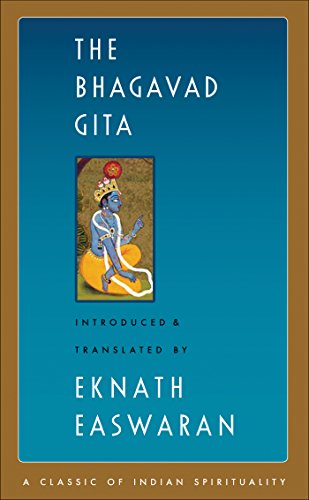
His series Classics of Indian Spirituality is a fantastic place to start exploring Eastern spirituality.  I'd recommend the Bhagavad Gita to begin...


The Perennial Philosophy Review


Drawing from primary texts across the spectrum of the world's religious traditions, in The Perennial Philosophy Aldous Huxley synthesizes mystic thought in a variety of areas.  Beginning with what the mystics believe about the nature of reality, Huxley goes on to show how this "Perennial Philosophy" plays itself out in their lives.  A fantastic springboard for exploring primary contemplative texts, there is no better book for an introduction to world mysticism.  

Overview:  Huxley begins by defining the "philosophy of the mystics," what has been called, since Gottfried Leibniz, the Perennial Philosophy because it shows itself in religious traditions across the ages.  In Huxley's words:
 

"Philosophia Perennis – the phrase was coined by Leibniz; but the thing – the metaphysic that recognizes a divine Reality substantial to the world of things and lives and minds; the psychology that finds in the soul something similar to, or even identical with, divine Reality; the ethic that places man's final end in the knowledge of the immanent and transcendent Ground of all being – the thing is immemorial and universal."


Huxley's definition brings together Western personal/theistic thought and Eastern, mostly non-personal, thought into one statement.  To speak roughly in the languages of West and East: 

In Western terms: (1) There is a God who is the Source of existence, (2) God dwells at the core of each human soul, and (3) our ultimate destiny, if we choose it, is union with God.  
In Eastern terms: (1) There is a Spiritual Ground of existence, (2) the core of each human soul is identical with the Spiritual Ground, and (3) our ultimate destiny, if we choose it, is absorption in the Ground.  


Huxley spends his first two chapters, That Art Thou and The Nature of the Ground, expanding on this definition.  In true mystic form, the nature of the Spiritual Ground which lies at the core of each created being is a mystery.  
 

"What is the That to which the thou can discover itself to be akin? To this the fully developed Perennial Philosophy has at all times and in all places given fundamentally the same answer. The divine Ground of all existence is a spiritual Absolute, ineffable in terms of discursive thought, but (in certain circumstances) susceptible of being directly experienced and realized by the human being."


In other words, God can't be defined, He can only be experienced directly.  That, my friends, is mysticism.  The God whom the worshipper may have "known" through their religious texts, doctrine, and faith tradition, suddenly becomes "unknowable."  The mystics are concerned almost exclusively with direct experience of God and how that experience transforms them; theology becomes a secondary matter.  This has, historically, often put them at odds with the official religious institutions they come from.  

After defining and expanding on the core philosophy of the mystics, Huxley spends the rest of the book looking at how this plays out in their lives.  I'll briefly look at three of these chapters:
 

Mortification, Non-Attachment, Right Livelihood:  The way to find God is to die to self.  The goal of the mystic is simply to become an empty vessel through which God may work.  Instead of identifying with the ego, the "I", the normal sense of self, the contemplative identifies with the divine "not-I," what is called the "Higher Self" in some traditions.  The life of the contemplative is thus a life of self-denial, not because self-denial is a good in and of itself, but because it is the ego, our self-will, that separates us from a life of union with God.


The Miraculous:  Here Huxley explores the existence of "miraculous events" and their connection to the mystics.  These type of events – supernatural healings, psychic powers, etc. – are often associated with contemplatives.  Surprisingly, their attitude towards the miraculous is one of indifference and can be summed up by a quote with which Huxley introduces the chapter:
 

"Can you walk on water? You have done no better than a straw. Can you fly in the air? You have done no better than a bluebottle. Conquer your heart; then you may become somebody."

– Ansari of Herat

It is salvation, deliverance, nirvana and how that experience can be lived out in the world that the contemplatives are interested in, not the cultivation of supernatural powers.  


Contemplation, Action and Social Utility:  The contemplatives believe that contemplation, the direct experience of God, is the ultimate end for which humanity is designed.  Action in the world (good works, etc.) may prepare the soul for contemplation, but action is not an end in itself.
 

"In all the historic formulations of the Perennial Philosophy it is axiomatic that the end of human life is contemplation, or the direct and intuitive awareness of God; that action is the means to that end; that a society is good to the extent that it renders contemplation possible for its members; and that the existence of at least a minority of contemplatives is necessary for the well-being of any society."


Ironically, it is also the contemplative, the one who has purified himself of self-will, that will naturally perform true positive action in the world:
 

"...action that is 'taken away from the life of prayer' is action unenlightened by contact with Reality, uninspired and unguided; consequently it is apt to be ineffective and even harmful."


In other chapters, Huxley delves into personal temperament and how it affects religious action, spiritual exercises, the role of ritual and sacrament, and various related topics.  


Personal Reflections:  Some critics think that Huxley finds too much commonality and not enough diversity in world mysticism, that he "makes the pieces fit" what he believes is a common core.  While there is certainly diversity in these traditions, I think Huxley does show that, while the mystics might not speak with one voice, they do often speak in harmony.

This book was life-changing for me.  As I was coming out of conservative religion, it helped me hang on to the belief that religion may, in fact, point to something real.  That even if all of my tightly held theology had been stripped away, I might still find God.  Nihilism works for some people, but it clearly wasn't going to work for me.  And that's where I would be if I hadn't found the contemplative versions of faith that are represented in this book.   

One of the more fascinating ideas that I come back to from The Perennial Philosophy is the idea that "knowledge is a function of being."  If we change ourselves by consciously "dying to self" and becoming selfless, we can change our "knowledge" or experience of the world.  Instead of interpreting the world through the tainted lens of our own needs and wants, our self-interest, we begin to see the world with different eyes.  And the mystics insist that if we can truly cleanse ourselves of our self-interest, the fruit will be a life of love, joy, and peace.  

I can't recommend this book, or Huxley as an author, enough.  If you are interested in world mysticism, start here.  

A Sufi Initiation


The following is a quote from The Historical Christ and the Theological Jesus, by Dale Allison.  In discussing the historicity of various gospel events (here, the transfiguration), Allison draws from analogous stories in other religions.  Here he recounts the experience of his personal friend:
 

"The foregoing testimonies intrigue me all the more because I personally know a man who claims to have seen a human being transfigured into light. This is not for me a foaftale, that is, it does not concern the proverbial friend-of-a-friend but comes to my ears from someone I know and have no reason to disbelieve (and who has refreshed my memory by kindly sharing with me his relevant journal entry).

In 1992 my friend John decided to seek initiation as a Sufi. The process involved having an audience with a Sufi master who was then making a tour of the States. The two men met in a small room for a short period of time. They sat face-to-face in lotus position. No words passed between them. But the occasion was memorable, for John relates that, after a bit, the master began to emit a light, which became brighter and brighter until it lit up the whole room, after which the luminescence gradually faded away, and the encounter was over."


– Dale Allison, The Historical Christ and the Theological Jesus


These type of "paranormal" events pop up in the mystic traditions with some regularity.  In the Hindu tradition, they are called siddhis.  What's interesting is that the mystics themselves don't attribute much importance to them.  Often they are even seen in a negative sense, a potential distraction from the real work to be done.

I don't know what to make of stories like these, but I do find them interesting to think about.  I think if I experienced something like this, I would take it as some type of confirmation that I was moving in the right direction.  

"The miraculous" is not the heart of mysticism, but it seems to be at least potentially related.  


Kicking Things Off


Hi all! Welcome to the site. The blog portion of this site exists mostly for me to organize my own thoughts regarding topics related to contemplative spirituality. Hopefully you can find something here that is of value to you on your own journey.

Feel free to explore and reach out if you have any thoughts on posts/pages on the site. I can be contacted at anthony@thecontemplativelife.org.

Welcome,

Anthony