Personal

Spiritual Goals


It seems really hard to have spiritual goals.

A lot of how I think about the spiritual life is in terms of moral and personal development. Am I more patient? Am I more present, accepting, loving, intentional, etc. than I was a year ago?

Those are really hard questions to answer. They don’t seem to be truly measurable except for a hunch or a feeling that I might be moving in the right direction. How do you measure how present you were in the last week?

Add to this the fact that my spiritual practice – Centering Prayer – is, at its core, a passive practice. I conceive of it as an opening of the self to God – to a transformation that can only happen by grace.

So the only real tangible spiritual goal I can think of is “time on the mat.” How much time do I actually spend in meditation, opening myself to the possibility of transformation, each day?

That’s pretty much all I can come up with for a true spiritual goal. Time on the mat.

Siddhis


The blog tends to be slightly or sometimes well behind where I am currently reading. I have several more series to do from within the Christian tradition, but am mainly reading in Vedanta and Yoga right now. As I have been reading more in the Vedanta and Yoga traditions, the concept of Siddhis (“miraculous powers” attained through meditation – see link for previous post) has been more on my mind.

Various teachers in the Yoga tradition put more or less weight on siddhis, with Patanjali himself seeming to view them as superfluous to the yogi’s true goal (see Pantajali’s Yoga Sutras 3:37). In general, I lean toward the belief that a fascination with siddhis and the like is a distraction from the contemplative quest. Nevertheless, reports of these types of things do surround the contemplative traditions as a whole.

The purpose of this post is to briefly document my own modest experience in this area:

When I first began seminary, I took a Spiritual Development class. One of my assignments was to spend multiple periods of two hours in prayer. There were no further instructions than simply to be in prayer for two hours.

During these periods I would pray for people I knew. Sometimes, I would inexplicably be presented with a powerful image while I was praying for an individual. In one case, as I was praying for a particular friend, I was presented with an image of the state of Washington. As far as I know, there was no prior link in my mind between this person and the state of Washington. The experience of the image itself could best be described as a “vivid stamp in the mind’s eye.” Hard to describe, but clear and unmistakable to me at the time.

As it happened, this friend (a former college roommate) called me soon after one of these prayer periods. He was in the military and at a point in his training when they were determining where he was going to be stationed next. He told me a few of the options: I remember New York being on the list along with several other states. He did not mention Washington as a possibility.

During our conversation, I told him “You are going to be stationed in Washington.” I then told him about the image I received while in prayer. He told me that Washington wasn’t an option, and the choice wasn’t up to him anyway, so we just left it at that.

A few months later my friend called me to tell me that, contrary to the options that had initially been presented to him, he was going to be stationed in Washington. He spent the next several years of his life there. At the time, both coming from an Evangelical perspective, we took it as a confirmation from God that this was where he was supposed to be.

I also had a similar experience around this time where an image was presented to me while praying for a friend which later seemed to be meaningful to the individual.

I don’t know what to make of these things, and of course coincidences happen and sometimes we interpret things in hindsight, drawing meaning where perhaps there was none to begin with.

But it’s also possible that we are connected in ways that we don’t understand. People, matter, time. We still really don’t know the first thing about how Reality works. And the deeper we go, the stranger and stranger things get.

So that’s my brief experience with Siddhis.

Retreats

I recently went on a 48 hour silent retreat. This Catholic facility provides unstructured retreats, simply giving you a hermitage (a heated one bedroom cabin in the woods with a chair, a bed, a basket of bread, and some fruit) and a chance to be silent.

My experience on these types of retreats is that I tend to get “clear” on things I need to get clear on. Regardless of how one interprets it, in silence and solitude there is often a conscious experience of what many describe as a deeper, more authoritative, or clarifying voice. Maybe that’s the voice of God; maybe it is your own deepest self. Maybe it’s “the part of me that is in tune with The Ultimate.” I don’t know. But it heals and it directs. At least that has been my experience when I go off to be alone.

In Praise of Suffering


Suffering drives us to spirituality. To the search for something, some meaning, beyond our own little world, our own concerns, our own ego. Sometimes when the suffering is taken away we just go back to that little world.

On Not Turning Back


In the Catholic Tradition, there is a distinction made between “the active life” and “the contemplative life.” The active life primarily involves a focus on engaging in works of charity in the world. It is a “busy” life full of fruitful work, performed in service to God.

In contrast, the contemplative life involves a focus on spiritual practice and development. It is less “busy” in the exterior sense.

Actives sometimes don’t understand contemplatives, believing that they aren’t “doing anything.” Contemplatives typically see actives as only on the first step of their journey, believing that they will understand the contemplative way in time, when they are ready. In Catholicism, the figures of Mary and Martha are often used to contrast these two ways of life. And of course there are shades in between the two poles.

Although I probably wouldn’t have made the distinction at the time, I spent many years of my life as an “active.” I taught and coached in inner city schools, volunteered in various capacities at night, and completed several graduate programs at the same time. I was busy, and I felt (and still do feel) that the work I was doing in the world was important.

Over the past several years I have taken a step back from many of these activities. I still work, but in a different capacity. Instead of engaging in all the demands of teaching, I work as an educational aide. I don’t volunteer as much. I’m not involved in formal academic studies. I am attempting to spend much more time engaging in contemplative practice. It’s what I feel called to do. It feels like a new vocation.

Sometimes I want to go back. Sometimes I feel like I need the busyness. I need to be distracted from myself. Contemplative practice, and in general a slower pace of life, can tear me apart. I’m face to face with myself.

But this is the path I am on.

Monk Days


I am a former teacher and still work in education, which means I get summers off. Long periods of unstructured time tend to drive me crazy. So, counterintuitively, summers end up being somewhat of a struggle for me.

This year I have been experimenting with “monk days.” On these days, I essentially wander around town with periodic breaks to practice meditation. Hospitals often have quiet meditation/prayer rooms as do many universities. So my day ends up looking like this:

Meditation at home
Walk to hospital/coffee shop, read, study, write
Meditate at hospital
Bus across town, walk to university, read, study, write
Meditate at university
Bus to shopping center/book store, read, study, write, talk to people
Meditate in quiet area
Walk/bus to new location (another university, quiet place, etc.)…

Basically these are days of alternating meditation with simple activities. These simple activities range from walking, to reading/writing, to talking with strangers, to cleaning the house.

I really like these monk days. Although I will have to modify my places of meditation because of the current pandemic (perhaps making my locations outside), I’m hoping to do them more often this summer.

Your Path Chooses You


I don’t think I can choose my spiritual path. I’ve tried experimenting with some different meditation techniques and have explored many traditions. While I do think there are a lot of similarities in what different meditators are doing, some techniques even being virtually identical, there is still a sense in which your path chooses you. My spiritual path – my discipline – is Centering Prayer. I’m not sure I could change that if I wanted to.

Life As It Is


I’m kind of on a spiritual high right now. When I’m on a high, my problems aren’t gone, but I feel like I’m 100% ok that they are there. I’m 100% ok with life as it is. My problems are there, but they don’t matter.

Phrases like “non-craving” and “non-striving” come to mind.

Thomas Merton | Brothers and Sisters


Recently, I’ve been consciously trying to see people in the world as my “brothers and sisters.” There is something about that mental category that seems to put me in the right frame of mind to appropriately see, and treat, everyone I encounter.

A Thomas Merton passage comes to mind, from Zen and the Birds of Appetite:

“The self is not its own center and does not orbit around itself; it is centered on God, the one center of all, which is ‘everywhere and nowhere.’ in whom all are encountered, from whom all proceed. Thus from the very start this consciousness is disposed to encounter ‘the other’ with whom it is already united anyway ‘in God.’”


If it is true that we all united by the same Source, then we truly are brothers and sisters.

A similar idea, from a more traditionally Buddhist point of view, came out when I was writing A Great Tragedy:

“Things were good for this group of six and life had been kind to them until this point. Tony was, in fact, sometimes jealous of the members of this group and others like them – those who it seemed life had only smiled upon. Tony didn’t realize that each member of this group was subject to the same wants, desires, fears, and anxieties that Tony himself was subject to. He had yet to realize that they too, simply by virtue of being human, would experience suffering and pain, each in their own way. He had yet to see them as fellow sentient beings, brothers and sisters on the journey of existence. But they were. And Tony would understand that with time.”


With Tony, I’m hoping that, in time, I can naturally see others as my brothers and sisters.

Singing Your Prayers


I've done a lot of things for a living.  Right now I drive a bus.

My bus is small, designed for people with disabilities and the elderly who have trouble getting around town.  So I get a chance to talk to my riders.

Last week, I picked up an older asian woman, and we had a long ride together.  On the way, she played some music from her phone.  

I didn't recognize the language, so I asked her what the lyrics said.  Her English was broken, so we struggled to have a conversation about it, but she told me they were "prayers to God."  She said they helped her "have a healthy mind and spirit."  It was beautiful music and I enjoyed listening on the ride, even though I didn't understand the words.  As a side note, she also told me she was Buddhist, so to say that "Buddhists don't believe in God" is too simple.  Buddhism is far too diverse for those kinds of statements.  

The encounter reminded me of an old co-worker I used to drive to work with.  She is Hindu and the music she played in the car was often prayers/chants in the Hindi language.  I found it beautiful. 

Singing your prayers.  

Limit Your Screentime


The last few days I've left the computer at home, gone out with a stack of books, and got to it.  I often read on a Kindle app on my computer or iPad, but recently I've returned to good old-fashioned books.

It's better for your soul.  

A few observations:
 

1. I have got into more good conversations with people at coffee shops or book stores in the last few days than I have in the previous few months.  It's partly because when you're not "plugged in," you present yourself as more open to being engaged.  It's also partly because I feel like I am thinking more clearly without screen time.  I want to engage people in conversation more.  It feels natural.  I'm in "the real world."
 

2. We have way more capacity for sustained attention than we think.  Being on a device lends itself to constant distraction.  Read a passage, check your email, read a passage, look up a book on Amazon, check the news, watch a video, check the price of my cryptocurrency investment, read a blog, read a passage.  

Without the screen, I can give my full attention to what I'm reading for a significant amount of time.  I just got through reading a 500 page novel and a 300 page historical study.  No way I could do that on my iPad.  Even if I go back and forth between a few books during a specific reading time, it's just different.  I'm fully in it.  

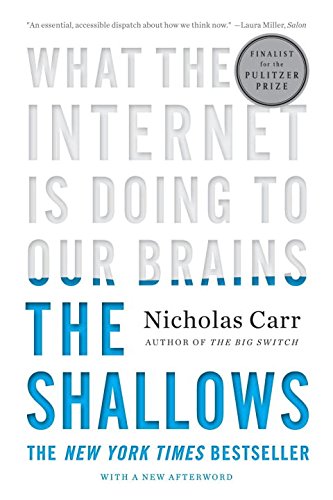
An interesting study on this ability (or inability) for sustained attention is found in The Shallows: What the Internet is Doing to Our Brains.
 

3. I don't worry about my stuff being stolen when I go to the bathroom.  I go to the bathroom in complete peace. 


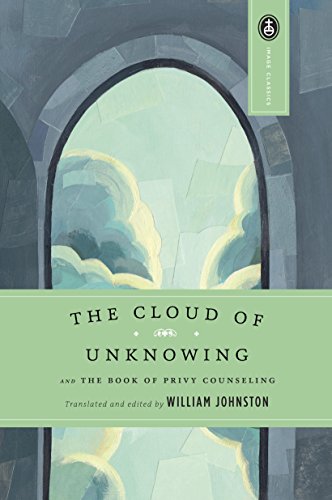
The author of The Cloud of Unknowing recommends that an aspiring contemplative cultivates three habits.


"Nevertheless, anyone who aspires to contemplation ought to cultivate Study, Reflection, and Prayer, or to put it differently, reading, thinking, and praying."


Reading.  Thinking.  Praying.  I think I do those things better when I'm not on or near a screen. 

Spiritual Practice and Anxiety


Just a reminder that spiritual practice can induce periods of increased anxiety.  In Centering Prayer, my own tradition, this is sometimes spoken of as the "unloading of the unconscious" which can include exposure to past traumas.  
 

"I call this third moment in the circular movement of Centering Prayer 'the unloading of the unconscious.' 'Unloading' refers to the experience of psychological nausea that occurs in the form of bombardment of thoughts and feelings that surge into our awareness without any relationship to the immediate past. That lack of connection with the source of painful thoughts or feelings is what identifies them as coming from our unconscious...Having carried this emotional pain for twenty or thirty years (or longer), the evacuation process may be extremely painful..."


–Thomas Keating, Intimacy with God


"...Centering Prayer is a psychological method and will produce results in that realm, some of them initially painful. In Intimacy with God Keating recounts how a graduate student recently did a thesis on Centering Prayer, along with several forms of Eastern meditation, recommending them as a way to reduce anxiety. Keating wrote back to the man saying, 'Centering Prayer will reduce anxiety for perhaps the first three months. But once the unconscious starts to unload, it will give you more anxiety than you ever had in your life.' For individual practitioners he recommends a limited dosage— twenty to thirty minutes twice a day is the normal prescription— to prevent the premature emergence of material into the conscious. Ten-day retreats rely on a trained staff to help handle a more intensive unloading process."


– Cynthia Bourgeault, Centering Prayer and Inner Awakening


I have heard and read of similar experiences from those who practice Vipassana and Zazen meditation.  While "the benefits of meditation" in the long term may include a more consistent inner calm, ups and downs are a normal part of most spiritual paths.  


Her


I re-watched Her for about the fourth time the other day.  I think it's just brilliant.


One theme that really resonates with the current series on Buddhism is that of impermanence.  We are not the same people, and thus our relationships are not the same relationships, from one day, one month, one year to another.  As shown in the movie, this is both exciting and challenging.  

Overall, Her is a fantastic exploration of what it means to be in relationship, any kind of relationship, with another changing, evolving being. 

It also contains a "hyper-intelligent," non-physical version of Alan Watts, so there's that...


Non-Attachment vs. Stoicism


I was listening to a podcast this week about Pascal's Pensées.  In the discussion, one of the participants made a passing comment lumping the Buddhist idea of non-attachment and Stoicism together.  

I've heard this before, and I think it is a misunderstanding of the idea of non-attachment.

Stoicism has the connotation of moderating emotion.  Not getting too high.  Not getting too low.  It has the connotation of disengaging from the exterior world, because getting too caught up in things will always disappoint.  

When the mystics tell us that we must become unattached to the things of the world, the ultimate goal is not to disengage from them entirely (although this may be needed for a time), but to engage with them fully without finding our life in them, without needing them for our happiness.  

Take the situation of a wedding day.  The Stoic is going to say: "Don't get too excited.  This day is only a temporary high.  The feeling of joy will soon pass, so don't let yourself get carried away."  The Stoic will tell you to moderate your emotion.  The mystic encouraging non-attachment will say: "Enjoy this day.  Fully enter into it.  It is one of the most meaningful and joyous days of your life.  The immediate emotion of this day will pass, yes, but your ultimate well-being does not lie in temporary events or emotions, but in Something deeper within you."

The goal of non-attachment is to fully enter in to life, but without clinging, without looking to the things of the world for our ultimate well-being.  


The Contemplative Life and Working Out


I used to be an athlete.  I pretty much had a sport for every season and I was good at most of them.  Football, in particular, was a big part of my life and I had the opportunity to play through college.  

Football is the kind of sport that you're always training for.  In the offseason, even though I was playing other sports, I was always training for football.  Squats, power cleans, bench press, rows, cardio, plyos, sprints.  It was hardcore.  My goal was to have the fastest, strongest body I could in order to be the best football player I could be.

After college, I stopped lifting and working out so much.  Part of it was that I no longer had as much of a reason to.  If I wasn't training to excel in a sport, what was my motivation?  It seemed to me that my motivation to work out, and especially lift weights, was to look better.  Pure vanity.  So I stopped.  I was okay that that season of my life had passed.

Fast forward to my early 30's.  I'm getting old.   Not old old.  But old.  Not working out in your 30's is a different thing than not working out in your 20's.  In your 20's you can get away with it.   You can still be generally healthy without training too much. In your 30's the pounds come real quick.  

So I'm starting to train again.  

Any action can be performed for self and any action can be performed for something beyond self.  In my spiritual life, I've come to the conclusion that, while it isn't necessarily wrong to do things for self, it's just empty.  I think training so that I can have a good looking body is an empty and unfulfilling goal.  It simply leads to more ego – more "I," "me," "mine" – which leads to more unrest.  Training to have more energy, a positive mood, and a healthier body so that I can better serve the world?  That's different.  According to Soren Kierkegaard, Purity of Heart is to Will One Thing.  A pure heart wills only "the good."  The saint lives purely to complete the will of God as she understands it.  From this point of view, if an action is directed toward "doing the most good," or "completing the will of God in the world," it comes from a pure motive.  

I can work out for self, or I can work out for something beyond self. 

The author of The Cloud of Unknowing, when speaking about the work of contemplative practice, has this to say about physical training:


"I am serious when I say that this work demands a relaxed, healthy, and vigorous disposition of both body and spirit. For the love of God, discipline yourself in body and spirit so that you preserve your health as long as you can."

The Cloud of Unknowing, Chapter 41


So I'm going to start discipling my body again.  And, as with just about every action I perform in life, I'll probably have mixed motives in doing so.  The less it's about self and the more it's about something beyond self, the better.