Resting in the Ground

“...let us remind ourselves that another, metaphysical, consciousness is still available to modern man. It starts not from the thinking and self-aware subject but from Being, ontologically seen to be beyond and prior to the subject-object division. Underlying the subjective experience of the individual self there is an immediate experience of Being… It has in it none of the split and alienation that occurs when the subject becomes aware of itself as quasi-object. The consciousness of Being is an immediate experience that goes beyond reflexive awareness. It is not ‘consciousness of’ but pure consciousness, in which the subject as such disappears. Posterior to this immediate experience of a ground which transcends experience emerges the subject with its self-awareness.”
– Thomas Merton, Zen and the Birds of Appetite
“We are each like a well that has a source in a common underground stream which supplies all. The deeper down I go, the closer I come to the source which puts me in contact with all other life.”
– John Welch, Spiritual Pilgrims: Carl Jung and Teresa of Avila
Apophatic spiritual practice, and the experience that flows from it, is often seen as the pinnacle of the contemplative journey. Resting in the Ground is a comparison of various forms of apophatic practice as understood by practitioners from the world’s major contemplative traditions. “God as Ground of Being,” a phrase popularized by Paul Tillich, but attested to by religious texts throughout history, is used as a synthesizing interpretive concept for understanding what is being experienced during apophatic practice.
Major meditative practices and traditions explored include Centering Prayer and the Christian Contemplative Tradition, Mantram and the Vedantic Contemplative Tradition, Yoga, Sati-Jhana and the Theravada Buddhist Contemplative Tradition, Zazen and the Zen Contemplative Tradition, Xinzhai/Zuowang and the Classical Taoist Contemplative Tradition, Jain Meditation and the Jain Contemplative Tradition, Dhikr and the Islamic Contemplative Tradition, the Sikh Contemplative Tradition, and the Jewish Contemplative Tradition.
Also included are reflections on the potential of practicing with agnosticism toward the Ground of Being, how cataphatic experiences may be related to apophatic practice, the embedding of meditation within wider spiritual paths, interpretations of what is sometimes called the “Higher Self” or the “egoless-ego” potentially achieved through meditative practice, and a vision for religious community based on shared silence and the space to practice from within one’s own framework. Resting in the Ground has not yet been released and will represent the eventual culmination of major site content.
An Introduction to Centering Prayer

An Introduction to Centering Prayer is a short tract which introduces the reader to the discipline of Centering Prayer, also sometimes referred to as “The Work of Contemplation.”
Topics addressed in the tract include: (1) The History of Centering Prayer and its connection to the anonymous 14th Century work The Cloud of Unknowing; (2) The Method of Centering Prayer as presented by Thomas Keating, including observations and commentary on each of the steps; (3) possible Theological Paradigms through which one may understand the practice; (4) Natural Effects of the prayer, including Control of the Mind, Distance Between “You” and Your Thoughts, Less Worry and Anxiety, Non-attachment to the Content of Thought, and increased Present Moment Awareness; and (5) The Shape of the Journey, especially emphasizing the possibility of “Dark Nights” associated with this practice.
This tract is simply intended to provide a brief overview of the practice and to lead the reader to further study. A list of Centering Prayer resources is also included, and many of these works can also be found on the Comparative Resources page of the site, here.
Samsara: and other Short Stories

Samsara: and other Short Stories is a collection of short stories on the spiritual journey, including thoughts on formation, spiritual experience, and the ongoing fruit of meditative practice.
A Great Tragedy
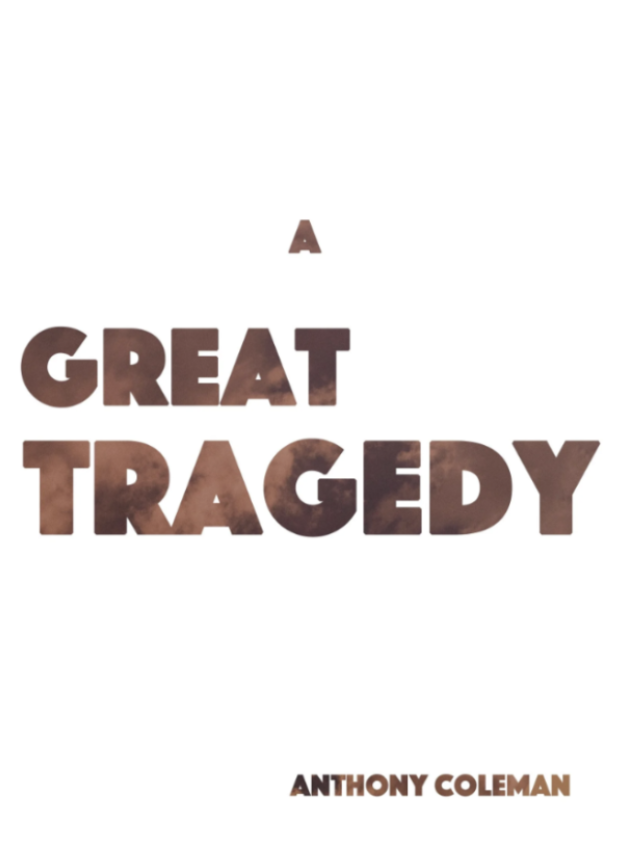
“Love makes the ego lose itself in the object it loves, and yet at the same time it wants to have the object as its own. This is a contradiction and a great tragedy of life.”
– D.T. Suzuki, Essays in Zen Buddhism
Tony, unsatisfied with life, decides to leave for a new town.
Perhaps the road will help Tony figure himself out.
A Great Tragedy is a short book on overcoming a selfish view of the world.