The Yoga Sutras of Patanjali | Practice and Dispassion


As we have seen, the goal of Yoga, according to Patanjali, is to still the changing states of mind.  The question then becomes: How?

In 1.12 of the Yoga Sutras we find our answer:
 

"The states of mind are stilled by practice and dispassion."


Much of the rest of the Sutras are elaborations on these two themes.  
 

"Practice" According to Patanjali
 

Meditative "practice" means many things to many people.  Indeed, it means several different things to Patanjali himself.  In the rest of Chapter 1, Patanjali describes several different forms of meditation that one can use to lead to a stilling of the mind.  The common thread throughout his different forms of practice is found in 1.13:
 

"Practice is the effort to be fixed in concentrating the mind."


All of Patanjali's practices are, it seems, forms of concentration meditation.  The object being concentrated upon can change, but the method of concentrating the mind intently on that object remains the same.  

He first recommends repeating the mystical symbol om, which represents Isvara – the personal aspect of God (1.28-1.29).
 

"Its (the mystical symbol om) repetition and the contemplation of its meaning should be performed. From this comes the realization of the inner consciousness and freedom from all disturbances (changing states of mind)."


But other objects of meditation may also be used, depending on the personality of the meditator.  Thus:
 

"Practice of fixing the mind on one object should be performed in order to eliminate these disturbances." (1.32)

"Or stability of mind is gained by exhaling and retaining the breath." (1.34)

"Or else, focus on a sense object arises, and this causes steadiness of mind." (1.35)

"Or the mind becomes steady when it has one who is free from desire as its object." (1.37)

"Or steadiness of the mind is attained from meditation upon anything of one's inclination." (1.39)


Bryant makes the following comment on Patanjali's objects of meditation:
 

"Sutra 1.32 indicated that the obstacles to yoga can be overcome by fixing or concentrating the mind on an object, and the next few sutras outline various options and methods for accomplishing this. Patanjali has already presented Isvara as an object of concentration in the form of recitation of the sound om, and by placing Isvara first on the list of options and dedicating so many sutras to him, Patanjali has clearly prioritized an Isvara-centered form of meditation. The following sutras up to 1.39 all also contain the particle va, or. Thus they are all alternative and optional techniques for fixing the mind and, as with the Isvara verses, are to be read as referring back to 1.32, that practice on one object eliminates the distractions to yoga. One or more of them might be more suitable to a particular person, time, and places, says Sankara, hence the options."


Dispassion
 

Dispassion, or its synonyms – renunciation, mortification, non-attachment – is part of the path of virtually all contemplative traditions.  Not only must one meditate and be transformed through "practice," but one must also consciously give up attachments to the "things of the world" which bind the soul.  It's not that the things are bad in themselves, it's that the soul becomes chained to them, it needs them.  For a yogi to reach his final goal, all attachment needs to be broken completely.  

The way to break attachment to any object is to do without it.  Not only does this include physical objects of pleasure, but even concepts about oneself.  For instance, if one is attached to the idea of themselves as "attractive," they may have to renounce this by consciously ceasing to take actions to increase their appearance.  In modern days, this may include not wearing makeup, not lifting weights, etc.  

The ideal for a yogi is a kind of "holy indifference."  If pleasurable things come, so be it.  If unpleasurable things come, so be it.  Any sense gratification is only temporary, and indulgence in sensory gratification is a dangerous distraction for the yogi.  

For Patanjali, both practice and dispassion are essential to reach the yogic ideal.  


Grandma


My Grandma passed away last week.

Grandma was a saint.  Whether it was the way she hosted the holidays – cooking a fantastic meal, making sure everyone felt included, keeping up to date on all of our lives – or the way she took care of her own disabled child into adulthood and her own husband as his health declined, or how she served her faith community for over 30 years, I truly don't know anyone as self-less as Grandma was.  She had lost concern for herself, and lived fully to serve God and others.  She had become a saint. 

In many ways I owe Grandma for my own spiritual journey.  Her strong faith, and the way she raised her children in the church, affected how my own parents raised me.  Although I have moved on from the religious structures I inherited, it was there where I began my journey.

As I continue this blog, most who resonate with my thoughts will be those who see themselves as "spiritual but not religious," those who may have moved beyond, or maybe have never been a part of, traditional western religious structures.  Contemplative spiritual practice tends to lend itself to a positive outlook on other faiths, a kind of openness to "universal spirituality," which is sometimes threatening to those who are part of traditional structures. 

But these structures can, and do, still work for many people.  My Grandma held very traditional beliefs about Jesus, the Bible, Salvation, etc.  She was nourished by the Christian scriptures, by sermons based on those scriptures, and by the body of Christ.  Traditional Christian beliefs and practices were part of what formed her character – what caused her to become self-less and completely other oriented.  

The experience of God can be accompanied by a host of different beliefs.  Some of those beliefs I agree with and some of them I do not.  Some of them I even find harmful if taken to their logical conclusions.  But just because a certain system doesn't "work" for me, doesn't mean it doesn't work for others.  It certainly did for Grandma.

Grandma's funeral ended with her favorite song, How Great Thou Art.  Rest in peace Grandma.  Thank you for the light you brought to our family.  We love you so much.  


The Yoga Sutras of Patanjali | The Goal of Yoga


The Yoga Sutras of Patanjali is the most famous text from the Yogic tradition of India.  It is here where, according to the author in verse 1, "the teachings of Yoga are presented" most clearly.  

The history of Yoga is somewhat cloudy.  The word itself is used in a variety of ways, in, for instance, the Bhagavad Gita, and the "Yogic" school of India overlaps significantly with other classic Vedic texts such as the Upanishads and the Bhagavad Gita.  The Yoga Sutras and these other classic Hindu texts share similar understandings of the Atman (the ground of the individual soul), and Brahman (the Divine Source of existence), although they sometimes use different terminology to describe these realities.  The earliest trace of Yogic practice are seals from the 3rd Millennium BCE in which figures are seated in a clear Yogic posture.

Very little is known about the author, Patanjali, but his systematization of earlier Yogic traditions eventually became authoritative and normative for all future practitioners.  The text itself is generally dated sometime between the 1st and 4th Centuries CE.  Patanjali's school of Yoga also eventually became classified as one of the six schools of classic Indian philosophy (Sankhya, Yoga, Nyaya, Vaisesika, Mimamsa, and Vedanta).  What Patanjali presents is not new, or his creation, but simply a systematizing of more ancient traditions.  

There are a wide variety of classic and modern translations and commentaries of The Sutras.  My favorite is from Edwin Bryant, who teaches at Rutgers University.  In this series, I will provide excerpts from the Yoga Sutras themselves and Bryant's commentary on them.

In his Introduction, Bryant describes the Goals of Yoga, according to Patanjali, as follows:

"According to Patanjali's definition in the second sutra, yoga is the cessation of the activities or permutations (vrttis) of the citta. The vrttis refer to any sequence of thought, ideas, mental imaging, or cognitive act performed by the mind, intellect, or ego as defined above – in short, any state of mind whatsoever. It cannot be overstressed that the mind is merely a physical substance that selects, organizes, analyzes, and molds itself into the physical forms of sense data presented to it; in an of itself it is not aware of them. Sense impressions or thoughts are imprints in that mental substance, just as a clay pot is a product made from the substance of clay, or waves are permutations of the sea. The essential point for understanding yoga is that all forms or activities of the mind are products of prakrti, matter, and completely distinct from the soul or true self, purusa, pure awareness or consciousness.

The citta can profitably be compared to the software, and the body to the hardware. Neither is conscious; they are rather forms of gross matter, even as the former can do very intelligent activities. Both software and hardware are useless without the presence of a conscious observer. Only purusa is truly alive, that is, aware or conscious. When uncoupled from the mind, the soul, purusa, in its pure state, that is, in its own constitutional, autonomous condition – untainted by being misidentified with the physical coverings of the body and mind – is free of content and changeless; it does not constantly ramble and flit from one thing to another the way the mind does. To realize pure awareness as an entity distinct and autonomous from the mind (and, of course, the body), thought must be stilled and consciousness extracted from its embroilment with the mind and its incessant thinking nature. Only then can the soul be realized as an entity completely distinct from the mind (a distinction such cliches as "self-realization" attempt to express), and the process to achieve this realization is yoga...

Through grace or the sheer power of concentration, the mind can attain an inactive state where all thoughts remain only in potential but not active form. In other words, through meditation one can cultivate an inactive state of mind where one is not cognizant of anything. This does not mean to say that consciousness becomes extinguished, Patanjali hastens to inform us (as does the entire Upanishadic/Vedantic tradition); consciousness is eternal and absolute. Therefore, once there are no more thoughts or objects on its horizons or sphere of awareness, consciousness has no alternative but to become conscious of itself. In other words, consciousness can either be object-aware or subject aware (loosely speaking). The point is that it has no option in terms of being aware on some level, since awareness is eternal and inextinguishable. By stilling thought, meditation removes all objects of awareness. Awareness can therefore now be aware only of itself. It can now bypass or transcend all objects of thought, disassociate from even the pure sattvic citta, and become aware of its own source, the actual soul itself, purusa. This is self-realization (to use a neo-Vedantic term), the ultimate state of awareness, the state of consciousness in which nothing can be discerned except the pure self, asamprajnata-samadhi. This is the final goal of yoga and thus of human existence."

– Edwin Bryant, The Yoga Sutras of Patanjali


All this to say, with Patanjali in Verses 2 and 3 of his Sutras, that:

"Yoga is the stilling of the changing states of the mind.
When that is accomplished, the seer abides in its own true nature."


For more on the Yoga Sutras, check out this lecture from Edwin Bryant:

The Cloud of Unknowing and Book of Privy Counseling | Thought Unified in Him Who is All


The Book of Privy Counseling is often packaged with The Cloud of Unknowing.  This short work is written by the same author as The Cloud, and represents his mature thought, after years of giving himself to the spiritual work.  

Chapter 1 of The Book of Privy Counseling could serve as a summation of the author's understanding of apophatic prayer.  

"When you go apart to be alone for prayer, put from your mind everything you have been doing or plan to do. Reject all thoughts, be they good or be they evil. Do not pray with words unless you are really drawn to this; or if you do pray with words, pay no attention to whether they are many or few. Do not weigh them or their meaning. Do not be concerned about what kind of prayers you use, for it is unimportant whether or not they are official liturgical prayers, psalms hymns, or anthems; whether you formulate them interiorly by thoughts, or express them aloud, in words. See that nothing remains in your conscious mind save a naked intent stretching out toward God. Leave it stripped of every particular idea about God (what he is like in himself or in his works) and keep only the simple awareness that he is as he is. Let him be thus, I pray you, and force him not to be otherwise. Search into him no further, but rest in this faith as on solid ground. This awareness, stripped of ideas and deliberately bound and anchored in faith, shall leave your thought and affection in emptiness except for a naked thought and blind feeling of your own being. It will feel as if your whole desire cried out to God and said:

That which I am I offer to you, O Lord,
without looking to any quality of your
being but only to the fact that you
are as you are; this, and nothing more.

Let that quiet darkness be your whole mind and like a mirror to you. For I want your thought of self to be as naked and as simple as your thought of God, so that you may be spiritually united to him without any fragmentation and scattering of your mind. He is your being, and in him, you are what you are, not only because he is the cause and being of all that exists, but because he is your cause and the deep center of your being. Therefore, in this contemplative work think of your self and of him in the same way: that is, with the simple awareness that he is as he is, and that you are as you are. In this way your thought will not be fragmented or scattered but unified in him who is all.

Yet keep in mind this distinction between yourself and him: he is your being but you are not his. It is true that everything exists in him as in its source and ground of being, and that he exists in all things, as their cause and their being. Yet a radical distinction remains: he alone is his own cause and his own being. For as nothing can exist without him, so he cannot exist without himself. He is his own being and the being of everything else. Of him, alone may this be said; and thus he is wholly separate and distinct from every created thing. And thus, also, he is one in all things and all things are one in him. For I repeat: all things exist in him; he is the being of all.

And since this is so, let grace unite your thought and affection to him, while you strive to reject all minute inquiry into the particular qualities of your blind being or of his. Leave your thought quite naked, your affection uninvolved, and your self simply as you are, so that grace may touch and nourish you with the experimental knowledge of God as he really is. In this life, this experience will always remain dark and partial so that your longing desire for him will be ever newly enkindled."

The Book of Privy Counseling, Chapter 1


This will be the last post in The Cloud of Unknowing series.  Coming from a Christian background, this is one of the first books that led me down the contemplative path.  I personally believe that this is one of the profound works of contemplative thought in world history and highly recommend getting a copy to dig into it further.  See the Centering Prayer page for more on The Cloud of Unknowing and its relationship to the Centering Prayer movement.


To end this series, here is a lecture on The Cloud given by Father Dennis Billy from St. Charles Borromeo Seminary.  

The Cloud of Unknowing | No Moderation


In many forms of modern contemplative practice, moderation is suggested.  In the Centering Prayer movement, leaders suggest two, twenty minute sessions per day.  The same recommendation seems to be present in the TM and Zen communities.  The idea is to encourage regular practice, not irregular, long sessions.  

Some of the concern, at least from Centering Prayer teachers, is that longer sessions may lead to an overload of intense psychological material being released from the subconscious.  For this reason, if a new practitioner wishes to dig deeper, many of these teachers will suggest a ten day retreat in the presence of experienced leaders, who may be able to lead someone through this experience in a safe way.

It is somewhat ironic that the author of The Cloud of Unknowing shows little concern for moderation in prayer.  In fact, he encourages none at all.  In the following exerpt, the author encourages "the middle path" in virtually all areas of life, but in the work of contemplative love, he wishes it would never cease.

"Now if you ask me what sort of moderation you should observe in the contemplative work, I will tell you: none at all. In everything else, such as eating, drinking, and sleeping, moderation is the rule. Avoid extremes of heat and cold; guard against too much and too little in reading, prayer, or social involvement. In all these things, I say again, keep to the middle path. But in love take no measure. Indeed, I wish that you had never to cease from this work of love.

But as a matter of fact, you must realize that in this life it will be impossible to continue in this work with the same intensity all the time. Sickness, afflictions of body and mind, and countless other necessities of nature will often leave you indisposed and keep you from its heights. Yet, at the same time, I counsel you to remain at it always either in earnest, or, as it were, playfully. What I mean is that through desire you can remain with it even when other things intervene. For the love of God, then, avoid illness as much as possible so that you are not responsible for unnecessary infirmity.

I am serious when I say that this work demands a relaxed, healthy, and vigorous disposition of both body and spirit. For the love of God, discipline yourself in body and spirit so that you preserve your health as long as you can. But if, despite your best efforts, illness overtakes you, be patient in bearing it and humbly wait for God's mercy. This is enough. Indeed, your patience in sickness and affliction may often be more pleasing to God than tender feelings of devotion in times of health."

The Cloud of Unknowing, Chapter 41


Again, the author commands his student to "beat relentlessly" on the cloud, so that he may experience the healing of God.

"And so stand firmly and avoid pitfalls, keep to the path you are on. Let your longing relentlessly beat upon the cloud of unknowing that lies between you and your God. Pierce that cloud with the keen shaft of your love, spurn the thought of anything less than God, and do not give up this work for anything. For the contemplative work of love by itself will eventually heal you of all the roots of sin. Fast as much as you like, watch far into the night, rise long before dawn, discipline your body, and if it were permitted – which it is not – put out your eyes, tear out your tongue, plug up your ears and nose, and cut off your limbs; yes, chastise your body with every discipline and you would still gain nothing. The desire and tendency toward sin would remain in your heart.

What is more, if you wept in constant sorrow for your sins and Christ's Passion and pondered unceasingly on the joys of heaven, do you think it would do you any good? Much good, I am sure. You would profit no doubt and grow in grace, but in comparison with the blind stirring of love, all this is very little. For the contemplative work of love is the best part, belonging to Mary. It is perfectly complete by itself while all these disciplines and exercises are of little value without it.

The work of love not only heals the roots of sin, but nurtures practical goodness. When it is authentic you will be sensitive to every need and respond with generosity unspoiled by selfish intent. Anything you attempt to do without this love will certainly be imperfect, for it is sure to be marred by ulterior motives. Genuine goodness is a matter of habitually acting and responding appropriately to each situation, as it arises, move always my the desire to please God."

The Cloud of Unknowing, Chapter 12


The Cloud of Unknowing | Let That Mysterious Grace Move


In this excerpt, the spiritual director uses the image of being wood to a carpenter.  The idea is that the practitioner of Centering Prayer is passive.  The goal is not to "do something," but to let something be done in you.  To let that mysterious grace move.

I come back to this image often.

"...become increasingly faithful to this work until it becomes your whole life.

To put it more simply, let that mysterious grace move in your spirit as it will and follow it wherever it leads you. Let it be the active doer and you the passive receiver. Do not meddle with it (as if you could possibly improve on grace), but let it be for fear you spoil it entirely. Your part is to be as wood to a carpenter or a home to a dweller. Remain blind during this time cutting away all desire to know, for knowledge is a hindrance here. Be content to feel this mysterious grace sweetly awaken in the depths of your spirit. Forget everything but God and fix on him your naked desire, your longing stripped of all self-interest."


The Cloud of Unknowing, Chapter 34


What's Wrong With Mindfulness Review


In What's Wrong with Mindfulness (and What Isn't), a host of Zen authors critically interact with the current mindfulness movement in the West.  Having witnessed the rise and fall in the popularity of Zen practice, these authors are in a unique position to offer advice to leaders in the mindfulness movement.  Contributors to this book range from being extremely critical of the direction of mindfulness to more sympathetic outlooks.  Mindfulness instructors and practitioners as well as those engaged in Western Buddhism as a whole will benefit from reading this collection of essays. 

Overview: The book is divided into two large sections: Critical Concerns, a series of essays which addresses the problems Zen authors see with the mindfulness movement, and Creative Engagement, a series of essays which explore Zen perspectives on mindfulness meditation itself.

Part One:  In Part One, Critical Concerns, each contributor offers their unique critique of the state of the mindfulness movement in the West.  Recurring themes, as discussed in the Introduction, are the realities of secularization (pulling meditation from its monastic setting, complete with ritual, the sangha, study, etc.), instrumentalization (seeing meditation primarily as a means to a particular personal end), and deracination (extracting meditation from the wider religious context of Buddhism as a whole, including its ethical and philosophical dimensions).  

Of these three concerns, the most common critique from the book's contributors surrounds instrumentalization, or seeing meditation as simply the means to a personal end.  Mindfulness meditation has been hailed as a method for stress reduction, a way of focusing and paying attention, a way to regulate emotions, a treatment for physical illness, an aide in psychotherapy, a path for personal happiness, a means of increasing kindness and compassion, and a way of living more in the moment.  The problem is not that mindfulness meditation may, in fact, lead to these positive effects, but that meditation is often seen as simply a means to an end that the practitioner finds desirable.  This focus on positive effects has, in the view of several contributors, led to the commercialization of meditation, or what has been dubbed "McMindfulness."  The examples of mindfulness being used by businesses (specifically Google) in order to improve production, or even by the military to help soldiers' performance, are pointed to as ways in which mindfulness has been co-opted and used for ends that are far from the original intention within the Buddhist tradition.  

Many of these authors feel that the Buddhist ideals of non-striving, or realizing the impermanence, unsatisfactoriness, and impersonal nature of all things is being lost when the focus is placed in improving a particular element of a practitioner's life.  

Other concerns discussed in this section of the book include the seeming "buffet" of options on the meditation and spirituality market and mindfulness' place in this New Age market, the divorce of mindfulness from a complete way of life, ambiguity in the meaning of the term "mindfulness" in popular usage, and skepticism, or at least caution, about the supposed scientific studies surrounding the movement, especially as it relates to brain research.  

Part Two:  In Part Two, Creative Engagement, Zen practitioners give their perspectives on mindfulness meditation itself.  Several of the authors in this collection either practice both forms of meditation or have even been officially certified in both.  Focus is placed on how both forms of meditation can be complimentary to one another, although, for these authors, Zen is the primary practice.  This section can be thought of as "seeing mindfulness meditation through a Zen paradigm" in the sense that the Zen tradition colors the authors' understanding of mindfulness, not the other way around. 

Of particular interest in this section is an essay on the word sati, often translated as "mindfulness," and a conversation between a teacher and student who are both trained in Soto Zen and Vipassana.  

Reflections:  As with any collection of essays, there were some that I found valuable and some that I didn't.  As a whole, I thought the first section of the book, which focused on the perceived problems with the mindfulness movement, was more thorough and more interesting.  I think those involved in Western Buddhism will find this part of the book to be far more important than Part Two.  Conversations surrounding these authors' critiques could lead to real change within the mindfulness movement (assuming it is just one movement).   Essays within this collection that I found to be the most helpful were Mischief in the Marketplace for Mindfulness, Mindfulness Myths, One Body Whole Life, and Two Practices One Path.  

Overall, I think the major trends within the mindfulness movement which are pointed out in these essays are accurate.  Mindfulness has become significantly unbundled from a Buddhist framework, probably moreso than any other form of spiritual practice has been uprooted from its religious context in history, and this is probably the biggest concern for those who approach the practice from a Buddhist understanding.  

Personal Takeaways:  I do not actively practice mindfulness meditation, although I sometimes go for "mindfulness walks" in which I feel I can cultivate the state of mind associated with vipassana meditation (i.e. creating an inner observer and simply watching physical and mental phenomena rise and fall).  My form of meditation – Centering Prayer – is much closer to Soto Zen practice than it is to mindfulness.  

One of the biggest takeaways for me comes from the forceful critique of using meditation for some perceived higher personal end (i.e. to have less stress, to be able to concentrate more, etc.).  Meditation, and in my case Centering Prayer, is more about changing the way you see things than changing the things themselves.  Maybe it is inevitable that people will come to meditation practices looking for a way to benefit their lives.  We are driven in large part by self-interest.  The paradox is that the more you deepen your practice, the less it becomes about you. 

One other takeaway I had was a connection with a line in the book's first essay.  When discussing the dangers of having beginners to the practice with no long-term training become instructors over others, Marc Poirier warns that students "may experience insights or rushes of psychological turmoil that an inexperienced instructor may be ill-equipped to address or perhaps even recognize."  As I've written about before in Centering Prayer, TM, and Emotional Struggle, I rarely see those from the TM movement, or Zen/Mindfulness movements talk about the emotional turmoil that can result from these practices.  It was just mentioned in passing here, but it caught my attention as a point of contact.  

This book will appeal mainly to leaders in the mindfulness movement, and it will be interesting to see the reaction from popular teachers.  It is sure to provoke plenty of discussion.  

The Cloud of Unknowing | A Cloud of Forgetting


In this excerpt, the author of The Cloud of Unknowing instructs the practitioner that he must put a cloud of forgetting between himself and all created things.  That is to say, during this type of prayer, no thought is welcomed or indulged.  The author is describing apophatic prayer – what is sometimes conceptualized as "resting in God." 

"If you wish to enter into this cloud, to be at home in it, and to take up the contemplative work of love as I urge you to, there is something else you must do. Just as the cloud of unknowing lies above you, between you and your God, so you must fashion a cloud of forgetting beneath you, between you and every created thing. The cloud of unknowing will perhaps leave you with the feeling that you are far from God. But no, if it is authentic, only the absence of a cloud of forgetting keeps you from him now. Every time I say "all creatures," I refer not only to every created thing but also to all their circumstances and activities. I make no exception. You are to concern yourself with no creature whether material or spiritual nor with their situation and doings whether good or ill. To put it briefly, during this work you must abandon them all beneath the cloud of forgetting.

For although at certain times and in certain circumstances it is necessary and useful to dwell on the particular situation and activity of people and things, during this work it is almost useless. Thinking and remembering are forms of spiritual understanding in which the eye of the spirit is opened and closed upon things as the eye of a marksman is on his target. But I tell you that everything you dwell upon during this work becomes an obstacle to union with God. For if your mind is cluttered with these concerns there is no room for him.

Yes, and with all due reverence, I go so far as to say that it is equally useless to think you can nourish your contemplative work by considering God's attributes, his kindness or his dignity; or by thinking about our Lady, the angels, or the saints; or about the joys of heaven, wonderful as these will be. I believe that this kind of activity is no longer any use to you. Of course, it is laudable to reflect upon God's kindness and to love and praise him for it; yet it is far better to let your mind rest in the awareness of him in his naked existence and to love and praise him for what he is in himself."


The Cloud of Unknowing, Chapter 5

The Cloud of Unknowing | Contemplative Work of the Spirit


The Cloud of Unknowing is an anonymous work, written by a spiritual director from the Catholic contemplative tradition in the 14th Century.  In it, the author describes a type of prayer in which one strives to reject all thought, hoping to experience and be healed by God in stillness of mind.  The author calls this state, one in which all thoughts are rejected and the mind is stilled, the cloud of unknowing.  He believes that encountering God in this way is the way to a changed spirit and character, and, ultimately, to union with God.  The modern Centering Prayer movement is based on the method of prayer found in this book.

Here, the author describes this "contemplative work of the spirit":

"This is what you are to do: lift your heart up to the Lord, with a gentle stirring of love desiring him for his own sake and not for his gifts. Center all your attention and desire on him and let this be the sole concern of your mind and heart. Do all in your power to forget everything else, keeping your thoughts and desires free from involvement with any of God's creatures or their affairs whether in general or particular. Perhaps this will seem like an irresponsible attitude, but I tell you, let them all be; pay no attention to them.

What I am describing here is the contemplative work of the spirit. It is this which gives God the greatest delight. For when you fix your love on him, forgetting all else, the saints and angels rejoice and hasten to assist you in every way – though the devils will rage and ceaselessly conspire to thwart you. Your fellow men are marvelously enriched by this work of yours, even if you may not fully understand how; the souls in purgatory are touched, for their suffering is eased by the effects of this work; and, of course, your own spirit is purified and strengthened by this contemplative work more than by all others put together. Yet for all of this, when God's grace arouses you to enthusiasm, it becomes the lightest sort of work there is and the one most willingly done. Without his grace, however, it is very difficult and almost, I should say, quite beyond you.

And so diligently persevere until you feel the joy in it. For in the beginning it is usual to feel nothing but a kind of darkness about your mind, or as it were, a cloud of unknowing. You will seem to know nothing and to feel nothing except a naked intent toward God in the depths of your being. Try as you might, this darkness and this cloud will remain between you and your God. You will feel frustrated, for your mind will be unable to grasp him, and your heart will not relish the delight of his love. But learn to be at home in this darkness. Return to it as often as you can, letting your spirit cry out to him who you love. For if, in this life, you hope to feel and see God as he is in himself it must be within this darkness and this cloud. But if you strive to fix your love on him forgetting all else, which is the work of contemplation I have urged you to begin, I am confident that God in his goodness will bring you to a deep experience of himself."


– The Cloud of Unknowing, Chapter 3


Ecce Homo and Nietzsche's Freedom


I haven't really read much Nietzsche.  I've read parts of Thus Spoke Zarathustra, but that's about it.

Last week, I picked up Ecce Homo, Nietzsche's autobiography.  It's really short – under a hundred pages – so I thought it was worth perusing.  

In a sense, Nietzsche is the exact opposite of an author I would interact with on a site dedicated to contemplative spirituality.  He is one of the most well known "anti-God" authors in the last several hundred years.  He hates all things spiritual, all things moral, and all ideals.  Listen to some of these lines from his autobiography:

"I do not set up any new idols; may old idols only learn what it costs to have legs of clay. To overthrow idols (idols is the name I give to all ideals) is much more like my business. In proportion as an ideal world has been falsely assumed, reality has been robbed of it's value..."

"...the lie of the ideal has been the curse of reality..."

"My experience gave me a right to feel suspicious in regard to all so-called 'unselfish' instincts, in regard to the whole of 'neighborly love' which is ever ready and waiting with deeds or with advice. To me it seems that these instincts are a sign of weakness, they are an example of the inability to withstand a stimulus – it is only among decadents that this pity is called a virtue."


For Nietzsche, any type of spiritual ideal – say "lovingkindness" or self-sacrifice – or any type of morality, any "thou shalt" or "thou shalt not," is a lie.  It is the enemy of humanity.  As he says in the last quote above, he regards the tendency toward brotherly love as a weakness.  He will not bow to the idol of an ideal, a moral concept, a God. 

While he might seem to be the exact opposite of a contemplative from any spiritual path, in a sense, I feel like Nietzsche is looking for the same thing as all the spiritual giants – complete and total freedom.  They are just freedoms of a different sort.

The freedom of the spiritual master is freedom from all the things of the world which tie us down and hold us back from spiritual joy.  Freedom from vanity.  Freedom from bondage to material comfort.  Freedom from self.  When one is finally freed from the chains of self, they are open to simply be a channel of the Holy Spirit.  From an Eastern perspective, a Buddhist seeks freedom from all attachment and thus the ability to live with loving-kindness toward all things.  

Spiritual freedom is freedom from self.

Nietzsche's freedom is a freedom toward self.  Nietzsche's ideal sets up the self against anything that claims to have power over it.  His "superman" is one who has cast off conventional ideals so that the self becomes the measure of all things.  The superman can do what he wants.  And what he most wants is power over all. 

Ultimately, Nietzsche's life ended in literal madness.  He believed that the world had not received his message because it was not ready.  In Thus Spoke Zarathustra, Nietzsche's madman, declaring the death of God, comes to the realization that his time has not yet come:
 

"Here the madman fell silent and again regarded his listeners; and they too were silent and stared at him in astonishment. At last he threw his lantern to the ground, and broke it and went out. 'I have come too early,' he said then; 'my time has not come yet. The tremendous event is still on its way, still traveling - it has not yet reached the ears of men. Lightning and thunder require time, the light of the stars requires time, deeds require time even after they are done, before they can be seen and heard.'"


Thus far, Nietzche's proclamation of the death of God has not been fulfilled.  Perhaps the decline of organized religion, but the death of God, of spirituality, of morality, of ideals, hardly seems immanent.

Perhaps, to the masses, the spiritual vision of freedom from self is just more appealing than Nietzsche's vision of freedom toward self.  


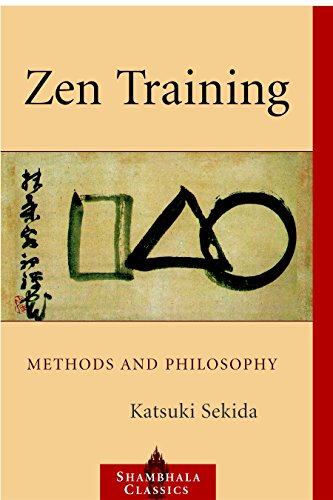
Katsuki Sekida's Four Types of Samadhi | #4 Neither Man nor Circumstances are Deprived


So far we've looked at three types of samadhi, or states of mind developed through Zen.  Sekida's fourth type of samadhi is "neither man nor circumstances are deprived."

(1) Man is deprived; circumstances are not deprived.
(2) Circumstances are deprived; man is not deprived.
(3) Both man and circumstances are deprived. 
(4) Neither man nor circumstances are deprived.  

As we have seen, "man," as Sekida defines it, is "that certain self-ruling power (which) dominates the mind. This spiritual power is the ultimate thing we can reach in the innermost part of our existence."  This "man" is what is developed through zazen meditation.  

In the first form of samadhi, "man" is absent (although he is ready to make his appearance when needed), and one is wholly absorbed is outward events.  This state of samadhi is the surgeon immersed in his operation, the basketball player immersed in the game, the pianist immersed in the performance.  As far as I can tell, it is what Mihaly Csikzentmihalyi calls "flow."

In the second form of samadhi, experienced during zen meditation, "man" is present, but circumstances are not.  The picture is of one completely absorbed in inward meditation as practiced in the zen tradition.

In the third form of samadhi, one enters into an even deeper state of meditation in which all self-reflective consciousness (i.e. "I know I'm meditating") ceases.  This is a rare state according to Sekida, and seems to be simply an intensification of the second form of samadhi.

Finally, we come to Sekida's fourth form of samadhi, in which both man and circumstances are present.  Here's how he speaks of this type samadhi:

"This category, 'neither man nor circumstances are deprived,' is the condition attained in the Zen student's maturity. He goes into the actual world of routine and lets his mind work with no hindrance, never losing the 'man' he has established in his absolute samadhi. If we accept that there is an object in Zen practice, then it is this freedom of mind in actual living.

To put it another way: when you are mature in practicing absolute samadhi, returning to ordinary daily life you spontaneously combine in yourself the first and third categories. You are active in positive samadhi and at the same time you are firmly rooted in jishu-zammai – the self-mastery of absolute samadhi. This is 'neither man nor circumstances are deprived,' the highest condition of Zen maturity. True positive samadhi achieved through Zen practice ultimately resolved into this fourth category.

A man may practice zazen and make certain progress in absolute samadhi and be successful in establishing the 'man' within himself. Then a new problem will arise, that of how he can exercise this man in his actual life in the busy world. When sitting on a cushion doing zazen he can attain samadhi and experience the man, and can realize that the man is really his absolute self. But when he comes out into his daily routine and eats, talks, and is active in his business, he often finds he has lost the inner man. He wonders how he can manage to maintain the man in himself in his daily life...

In short, the student who is puzzled how to retain the inner man in his daily life – who wonders how he can embody Mu in himself in his actual life – is striving for the condition in which both the inner man and the outward concerns – man and circumstances – are not deprived but are freely in action. In the first category man was inactive; in the fourth category man has returned to the front line. One who has attained maturity in Zen can behave freely and does not violate the sacred law: both man and circumstances are in vigorous activity and there is no hindrance. Only maturity in Zen will secure this condition – the ultimate aim of Zen practice."


This feeling that one is absorbed in the content of daily life, and is, at the same time, being directed by the "inner man" is, according to Sekida, the aim of Zen practice.

The way he describes this form of samadhi is very similar to the language of working with an "Inner Observer" or "doubled awareness" in other traditions.  This reality has been described as being aware of the contents of consciousness and the field of consciousness at the same time.  In Centering Prayer, it might be spoken of as being fully present to God and the present moment circumstance at the same time.  Drawing parallels between traditions is sometimes dangerous and fails to respect the uniqueness of each tradition, but the parallel here jumps out at me.  As I mentioned in the first post of this series, when describing types of samadhi, Sekida almost seems to be describing my own experience of Centering Prayer, just with different terminology.

This will be the last post of this series.  I highly recommend Sekida's Zen Training as an accessible introduction to Zen.  It's important to note that it is an introduction from only one persons's perspective; and different authors from the Zen tradition often describe it in very different ways. 


Victor Frankl on Meaning


"Thus, to all appearances, meaning is just something we are projecting into the things around ourselves, things which themselves are neutral. And in the light of this neutrality, reality may well seem to be just a screen upon which we are projecting our own wishful thinking, a Rorschach blot, as it were. If that were so, meaning would be no more than a mere means of self-expression, and thus something profoundly subjective.

However, the only thing which is subjective is the perspective through which we approach reality, and this subjectiveness does not in the least detract from the objectiveness of reality itself. I improvised an explanation of this phenomenon for the students in my seminar at Harvard. 'Just look through the windows of this lecture hall at Harvard Chapel. Each of you sees the chapel in a different way, from a different perspective, depending on the location of your seat. If anyone claimed that he sees the chapel exactly as his neighbor does, I would have to say that one of them must be hallucinating. But does the difference of views in the least detract from the objectivity and reality of the chapel? Certainly it does not.'

Human cognition is not of kaleidoscopic nature. If you look into a kaleidoscope, you see only what is inside of the kaleidoscope itself. On the other hand, if you look through a telescope you see something which is outside of the telescope itself. And if you look at the world, or a thing in the world, you also see more than, say, the perspective. What is seen through the perspective, however subjective the perspective may be, is the objective world. In fact, "seen through" is the literal translation of the Latin word, perspectum.

I have no objection to replacing the term 'objective' with the more cautious term 'trans-subjective' as it is used, for example, by Allers. This does not make a difference. Nor does it make a difference whether we speak of things or meanings. Both are 'trans-subjective.' This trans-subjectiveness has really been presupposed all along whenever we spoke of self-transcendence. Human beings are transcending themselves toward meanings which are something other than themselves, which are more than mere expressions of their selves, more than mere projections of these selves. Meanings are discovered but not invented...

...Thus we have arrived at a definition of what meaning is. Meaning is what is meant, be it by a person who asks me a question, or by a situation which, too, implies a question and calls for an answer. I cannot say. 'My answer right or wrong,' as the Americans say, 'My country right or wrong.' I must try hard to find out the true meaning of the question which I am asked.

To be sure, man is free to answer the questions he is asked by life. But this freedom must not be confounded with arbitrariness. It must be interpreted in terms of responsibleness. Man is responsible for giving the right answer to a question, for finding the true meaning of a situation. And meaning is something to be found rather than to be given, discovered rather than invented."

– Victor Frankl, The Will to Meaning


We could say that meaning is the answer that an individual must give in light of the demands of life.  


Here's Frankl with a short interview on The Will to Meaning:

Katsuki Sekida's Four Types of Samadhi | #3 Both Man and Circumstances are Deprived


Sekida's third type of samadhi, or mental state, associated with Zen is "Both man and circumstances are deprived."

(1) Man is deprived; circumstances are not deprived.
(2) Circumstances are deprived; man is not deprived.
(3) Both man and circumstances are deprived.
(4) Neither man nor circumstances are deprived.

This type of samadhi, achieved during Zen meditation, is an intensification and deepening of State #2.  The difference, according to Sekida, is that the "self-reflecting action of consciousness" is lessened, even to a point where it disappears altogether.  

Here's how he describes "Both man and circumstances are deprived":

"The third category is "Both man and circumstances are deprived." A discussion of this category must be preceded by an explanation of self-consciousness. I have said that consciousness functions in two ways, outwardly and inwardly. There is another important action exercised by consciousness: one that reflects upon its own thought. This kind of reflection must be distinguished from general introspection, which deals with character or behavior. When we think, 'It is fine today.' we are noting the weather, but we are not noting that we are thinking about the weather. The thought about the weather may last only a fraction of a second, and unless our next action of consciousness reflects upon it and recognizes it, our thought about the weather is allowed to pass away unnoticed. Self-consciousness appears when you notice your thought, which immediately precedes your noticing it, and you then recognize the thought as your own.

If we do not perform this noticing action we do not become aware of our thinking, and we will never know that we have been conscious at all. We may call this action of noticing our own thoughts "the reflecting action of consciousness" to distinguish it from general introspection...

Now, when one is in absolute samadhi in its most profound phase, no reflecting action of consciousness appears. This is Rinzai's third category, "Both man and circumstances are deprived." In a more shallow phase of samadhi, a reflecting action of consciousness occasionally breaks in and makes us aware of our samadhi. Such reflection comes and goes momentarily, and each time momentarily interrupts the samadhi to a slight degree. The deeper the samadhi becomes, the less frequent becomes the appearance of the reflecting action of consciousness. Ultimately the time comes when no reflection appears at all. One comes to notice nothing, feel nothing, hear nothing, see nothing. This state of mind is called "nothing." But it is not vacant emptiness. Rather is it the purest condition of your existence. It is not reflected, and nothing is directly known of it. This nothingness is "Both man and circumstances are deprived," the condition Hakuin Zenji called "the Great Death." The experience of this Great Death is no doubt not common in the ordinary practice of zazen among most Zen students. Nevertheless, if you want to attain genuine enlightenment and emancipation, you must go completely through this condition, because enlightenment can be achieved only after once shaking off our old habitual way of consciousness."


In this third type of samadhi, all disappears, even one's awareness that they are experiencing samadhi.  


Katsuki Sekida's Four Types of Samadhi | #2 Circumstances are Deprived; Man is Not Deprived


Continuing the Samadhi series, Katsuki Sekida's second form of samadhi is "Circumstances are deprived; man is not deprived."

(1) Man is deprived; circumstances are not deprived.
(2) Circumstances are deprived; man is not deprived.
(3) Both man and circumstances are deprived.
(4) Neither man nor circumstances are deprived.

In Sekida's first form of samadhi, one is totally absorbed in outward circumstances.  In Sekida's second form of samadhi, the situation is reversed.  Outward circumstances disappear and one becomes absorbed in the "inner man."

"The second category ... denotes inward attention. When we work on Mu or practice shikantaza, we concentrate inwardly and there develops a samadhi in which a certain self-ruling spiritual power dominates the mind. This spiritual power is the ultimate thing that we can reach in the innermost part of our existence. We do not introspect it, because subjectivity does not reflect itself, just as the eye does not see itself, but we are this ultimate thing itself. It contains in itself all sources of emotion and reasoning power, and it is a fact we directly realize in ourselves.

Rinzai Zenji calls this ultimate thing 'man.' When this 'man' rules within us in profound samadhi, circumstances are forgotten. No outward concern appears. This state of mind is 'Circumstances are deprived, man is not deprived.' It is an inward samadhi and it is what I have called absolute samadhi, because it forms the foundation of all zazen practice. It contrasts with the outwardly directed samadhi described in the first category, which I call positive samadhi. Positive samadhi is a samadhi in the world of conscious activity. Absolute samadhi is a samadhi that transcends consciousness. When we simply use the term samadhi by itself we generally refer to this absolute samadhi."


As a practitioner of Centering Prayer, the similarities here are obvious.  When Sekida says things like "a self-ruling spiritual power dominates the mind," that it is "the ultimate thing that we can reach in the innermost part of our existence," and "it contains in itself all sources of emotion and reasoning power," he is essentially describing the Centering Prayer experience without using the word God.  The major difference is that in Sekida's description, this self-ruling power, what he calls "man," is you ("we are this ultimate thing itself").  Most who practice Centering Prayer would conceptualize this differently, interpreting this power as something outside of themselves, although even this gets hazy as the experience is often described as "the presence of God at the deepest level of your being."

Sekida's description of the second form of samadhi is the closest I have found to describing the experience of Centering Prayer, but from the perspective of a different religious tradition.  In his discussion here, we're almost speaking the same language.  
 

Katsuki Sekida's Four Types of Samadhi | #1 Man is Deprived; Circumstances are Not Deprived


In Zen Training: Methods and Philosophy, Katsuki Sekida discusses four categories of "samadhi."  Samadhi is one of those terms that gets used in different ways by different authors, and this often creates difficulty when discussing the concept.  In the modern Christian contemplative tradition, True Self / False Self language shares this problem.  Sekida uses the term in a very general way in which it may simply be taken to mean "mental absorption."  He then delineates between types of mental absorptions, or "types of samadhi."  

I find huge overlap in Sekida's descriptions and what I have experienced in my own practice of Centering Prayer.  More than any other Zen author, I feel like his language really speaks to my own, non-officially-Zen, experience.  

Sekida's categories of samadhi are:

1. Man is deprived; circumstances are not deprived.
2. Circumstances are deprived; man is not deprived.
3. Both man and circumstances are deprived.
4. Neither man nor circumstances are deprived.

I'll take each of the categories in separate posts.  A preliminary note – when Sekida uses the word "man" here, he is talking about what he calls "a certain self-ruling spiritual power (which) dominates the mind."  This "man" is developed through Zen practice and thus is difficult to understand for those who haven't had the experience.  Here's how Sekida describes the first category of samadhi: "Man is deprived; circumstances are not deprived":  

"The first category 'Man is deprived; circumstances are not deprived' denotes a situation in which one's mind is absorbed in outward circumstances. A famous surgeon was once performing an operation that required great concentration. While he was working there was a sudden earthquake. The shocks were so severe that most of the attendants involuntarily ran out of the room for safety. But the surgeon was so absorbed in the operation that he did not feel the shocks at all. After the operation was over he was told of the earthquake, and this was the first he knew of it. He had been completely absorbed in his work, in a kind of samadhi.

We experience this kind of samadhi when we are watching a football game, reading, writing, thinking, fishing, looking at pictures, talking about the weather, or even stretching out a hand to open the door – in the moment of sitting down or stepping forward. In fact, we are at every moment absorbed in that moment's action or thought. There are various degrees of absorption, various periods of duration, and differences between voluntary and involuntary attention: the differences, for example, between our watching a football game (involuntary attention) and the surgeon performing the operation (voluntary attention). But we are almost always experiencing a minor or major condition of momentary samadhi, so to speak. When we are in this sort of samadhi we are quite forgetful of ourselves. We are not self-conscious about our behavior, emotions, or thought. The inner man is forgotten and outer circumstances occupy our whole attention. To put it another way: inward concern is absent; outward concern dominates...

Now, it is important to recognize the difference between true samadhi with self-mastery and the false kind of samadhi without it. In the first, even when the inner man is forgotten, he is not forsaken. The firmly established man is getting along well within, ready to make his appearance at any time. False samadhi lacks this self-mastery from the outset. There can be fighting samadhi, stealing samadhi, hating samadhi, jealousy samadhi, worrying, dreading, upsetting samadhi, but all without the guidance of self-mastery. These are not true samadhi as it is understood in Zen...

Not losing self-mastery but at the same time being involved in external conditions is the real meaning of 'Man is deprived; circumstances are not deprived.' In this state the inner man is simply inactive."


So, according to Sekida, full absorption in what one is doing, when the inner man is "ready to make his appearance at any time," is this first kind of samadhi.  Another way you could put it is that this kind of samadhi is absorption in the task at hand as directed by the "inner man" achieved through Zen practice.  

This full absorption in the task at hand is, it seems to me, what Mihaly Csikszentmihalyi calls "Flow."


Thomas Keating's False Self


In his various discussions of Centering Prayer, Thomas Keating often uses the term "False Self."  This term has also been used by other writers including Thomas Merton, Richard Rohr, etc.  Each author uses the term in a slightly different way.

For Keating, the False Self is created when we experience emotional trauma throughout our lives.  As we experience wounding in areas of our core psychological needs (for Keating, these needs are summarized in the categories of power/control, esteem/affection, and security/survival), we develop attachments to people, places, and situations that bring us comfort, and aversions to people, places, and situations that lead to discomfort in the light of these wounds. 

This collection of attachments and aversions results in what Keating calls "emotional programs for happiness."

A young child overhears his father saying, "I wish he was more like his brother," which attacks his core psychological need for esteem/affection.  The incident then becomes buried in the boy's subconscious.  He may not even remember the incident in adulthood, but, on a subconscious level, part of him continues to want to imitate his brother to achieve his father's affection.  The "emotional program for happiness" of "needing to be like my brother" becomes a deep part of who he is.  As a result, he develops attachments to things that make him more like his brother, and aversions to things that make him different.  These attachments and aversions, at least in part, continue to drive his behavior throughout life.

On this model, each human being has a host of emotional programs for happiness running at the same time, each based on our unique traumas.  These programs create anxieties as we interact with the world, and may even conflict with each other.  

For Keating, the False Self is our wounded self; and our self that searches for things in the world to help us deal with those wounds. 

The solution, for Keating, is experiencing the "Divine Therapy" through Centering Prayer.  As we get deeper into our practice and become more open to the presence of God, these incidents are released from the subconscious and we eventually become healed of our traumas.  Keating calls this the Archaeological Dig.  The result might be what Keating would call our True Self, our healed sense of self that has our core needs fulfilled through the presence of God.  


For more on Keating and Centering Prayer, check out the Centering Prayer page of the site.  

The Path of Shinzen Young


A few posts back I quoted Shinzen Young on his understanding of Enlightenment and how it looks across religious traditions.  This is a podcast in which he recounts his spiritual path.  I especially relate to his realization of the universality of mystic experience (7:30 and following) which can be an important point of contact in inter-religious dialogue.  

Shinzen teaches mostly vipassana "mindfulness" meditation.

Salvation over Philosophy


The mystical writers are, in some sense, philosophers.  They are trying to understand the world as it is.  But they are generally concerned with "knowledge" only to the extent that it leads to what they deem to be "salvation."  The mystics are sometimes contrasted with the great Greek philosophers – the pure philosophers are concerned with only the head, while the mystics are concerned with the liberation of the heart and soul.

In Mysticism: East and West, Rudolph Otto compares the lives and thought of two representative mystics – Meister Eckhart of the West and Sankara of the East.  In his chapter Not Metaphysics but a Doctrine of Salvation, Otto discusses these two mystics in comparison to philosophers:

"Sankara is usually regarded as the greatest philosopher of India, and Meister Eckhart in the history of philosophy as the creator of an original philosophical system. Yet both are at bottom alike in that they are not so much philosophers as theologians. They are indeed metaphysicians, but not in the sense of the metaphysics of Aristotle or of the philosophical schools. Their impelling interest is not 'science' as a theoretical explanation of the world...Neither of them is concerned for 'knowledge' out of curiosity to explain the world, but each is impelled by a longing for 'salvation.' ...

The 'Being' of which they speak is to be a 'salvation.' That that Being is one, without a second, that it is undivided, without apposition or predicate, without "How" or fashion, these are not merely metaphysical facts but at the same time 'saving' actualities. That the soul is eternally one with the Eternal is not a scientifically interesting statement, but is that fact upon which the salvation of the soul depends."


The "Super-Meaning" of Life


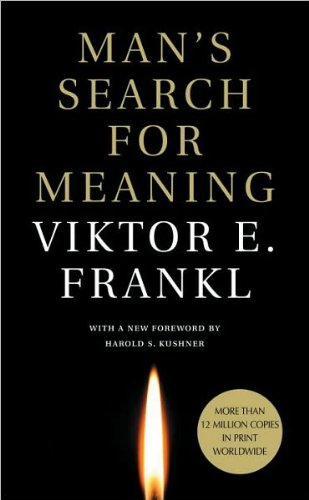
Viktor Frankl believed that, beyond anything else, human beings crave meaning.  We can endure any what, he thought, as long as we have a why.  Without a "why," we are simply adrift in the world, and at best find some measure of satisfaction through distraction and entertainment.  But that is not living deeply, and a life without felt meaning ultimately leads to neurosis and depression.  

I, along with many others, agree with Frankl.  I think we desire meaning more than comfort.  I think the sense that our actions have real significance is a fundamental need of humanity.  

But, if we truly do need some sense of significance, where does it come from?

One option, probably the most popular in modern society, is the idea that meaning is fundamentally a human construct that we have the ability to superimpose on reality.  That is, we create our own meaning in the world.  We give ourselves a why.  It seems to me that without invoking some type of spiritual reality (i.e. God, a meaning-giver, etc.), if we want to hold on to some type of concept of meaning, this is what we are left with.  

I've never been satisfied with this idea.  To me, it just seems to make meaning arbitrary, and arbitrary meaning, at least in my mind, is just as good as no meaning.  Take the following two statements:
 

"My main purpose in life is to drink soda."

"My main purpose in life is to raise my son well."


If I'm just creating my own meaning in the world, either one of these is equally valid.  It's my choice.

But one of these statements intuitively feels more correct.  If I had a son and subordinated raising him well to my soda habit, most people would say something is drastically wrong.  Most would say that I'd be missing out on a life filled with more meaning (giving my best energies to raising my son), for one with less meaning (drinking soda).

Another way to think about meaning is the idea that it is something we discover.  That it is an inherent part of reality, an actual part of the universe that we find.  This, it seems to me, gives the concept of meaning some actual weight, some depth.  Meaning becomes real and not simply a product of our minds.  And I think the only way to leave this idea open as an option is to invoke some type of spiritual worldview.  

Frankl was mostly concerned with helping people find meaning in their own lives and circumstances.  And that's, mostly, what we need.  The abstract question "What's the meaning of life?" is less important than the question "What's my meaning in life?".  But, as Frankl seems to say, if there is such a thing as my meaning, it seems that it must be a function of the meaning of life.  

Frankl calls this ultimate meaning of life its "super-meaning."  For Frankl, the super-meaning will be forever beyond our grasp as finite humans.  Our task is not to bear the meaninglessness of life, but to bear the fact that we can't fully understand its ultimate meaning. 
 

"This ultimate meaning necessarily exceeds and surpasses the finite intellectual capacities of man; in logotherapy, we speak in this context of a super-meaning. What is demanded of man is not, as some existential philosophers teach, to endure the meaninglessness of life, but rather to bear his incapacity to grasp its unconditional meaningfulness in rational terms. Logos is deeper than logic."

– Viktor Frankl, Man's Search for Meaning


The idea that there is a "super-meaning" – an Ultimate Meaning of Life – even if we can't fully understand it, seems to allow us to hold that the meanings we find in our own lives are an actual part of reality and not merely a creation of our imaginations.