Personal

A Great Tragedy

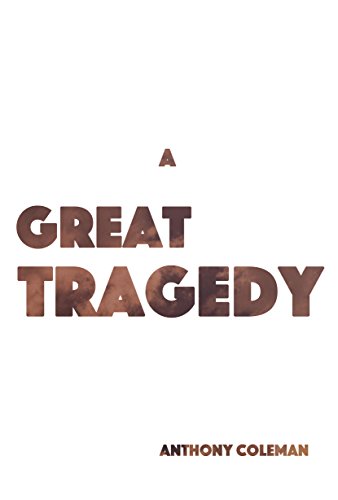
A Great Tragedy was recently released and is now available for sale.  For a description, check out the My Books page.  

Expressing a set of ideas through fiction is a different kind of project for me, but it was a good way to explore some ideas surrounding self-will and ego.  I hope to do some more along these lines, perhaps a collection of short stories based on themes from the contemplative writers, in the future. 

And with that I'll be taking a break from blogging for a while.  I'm starting some grad classes so I'll be busy writing other things.  In the meantime, hopefully some of the previous blog posts/pages are helpful for you on the journey.  I've also continued to enjoy interacting with readers, so feel free to contact me with any questions/comments on site content at anthony@thecontemplativelife.org.  


Anthony


Doubled Awareness


Not ready to start my Eightfold Noble Path series yet, so we're going to do a series of quotes and posts that I've had in my back pocket.  I wrote this two weeks ago after an experience at Target.  The concept of "Doubled Awareness" or having an "Inner Observer," is talked about both by those who practice Mindfulness and those who practice Centering Prayer.  It's an odd experience, and if you've never had it, it is hard to describe.  Nevertheless, after having it, I tried to...
 

I was walking through Target today and I became aware that I was experiencing doubled awareness, or the phenomenon of the inner observer. 

This state of mind happens to me, rarely, and usually comes out of nowhere.  As I wrote in my tract on Centering Prayer, sometimes I do feel like I can induce it, but more often than not, when I have the experience, it just happens.

I am writing this about an hour later and want to describe it because it's fresh.

When I am in this state of mind, it's as if I am watching my experience happen.  I am not my thoughts, my actions, or my emotions, but I observe them.  It is as if my whole life is a movie and I am aware that I am watching it.  Reality just kind of flows, and it struck me that 'I'm not coming to my experience with clinging or want.'  Reality is just happening, and I am part of it.  

I feel like I am in control of what I am doing.  In that sense, I'm not 'just observing.'  I still have will.  But it is coming from a different place.  A deeper place inside of me than my mind.  

It isn't an ecstatic state of mind.  I'm not overcome with joy.  But when I am experiencing it, it is clearly preferable to how I normally perceive life.  

I am watching through my eyes, but it's another 'me.'  


Appeal to God as a Solution to The Absurd


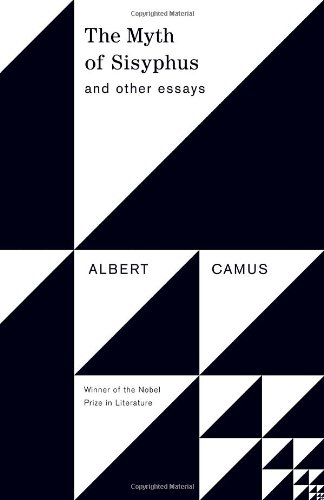
The Myth of Sisyphus has always stuck in my head. 

In the story, as punishment for a crime (apparently his crime differs in various versions of the story), Sisyphus is condemned by the gods to an eternity of labor.  His task is to push a boulder up to the top of a mountain, knowing that each time he reaches the top, the boulder will come tumbling down and he will have to start again.  This is his task for all eternity.  Heavy labor which serves no purpose; endless, exhausting, meaningless work.  Work he knows is meaningless.  

Albert Camus wrote a famous essay entitled The Myth of Sisyphus in which he uses Sisyphus as an example of the Absurd Man – the person who accepts the absurdity of life and embraces it.  He concludes his essay with these thoughts:
 

"The struggle itself toward the heights is enough to fill a man's heart. One must imagine Sisyphus happy."


For Camus, "the absurd" is "the divorce between the actor and his setting."  We find ourselves as beings who desire meaning and purpose, only to be put in a world in which meaning seems absent.  We live.  We die, and seemingly enter an eternity of non-being.  Anything beyond that is a hope, not knowledge.  All the things we create and accomplish seem to go for naught.  Our work, our lives, seem meaningless in light of our fate. 
 

"...in a universe suddenly divested of illusion and lights, man feels an alien, a stranger. His exile is without remedy since he is deprived of the memory of a lost home or the hope of a promised land. This divorce between man and his life, the actor and his setting, is properly the feeling of absurdity."

"The absurd is born of this confrontation between human need and the unreasonable silence of the world."

"The absurd is essentially a divorce. It lies in neither of the elements compared; it is born of their confrontation."


Camus' essay is an exploration of whether intellectually accepting that life is absurd should logically lead to suicide or not.  In the end Camus rejects suicide as the logical conclusion of the absurd.

Part of the reason that Camus rejects suicide is that he doesn't think the absurd should be solved.  For Camus, to resolve the problem in any way doesn't do justice to the true nature of life.  We must look absurdity straight in the face and embrace it.  We must be happy Sisyphi.

In the course of his essay, Camus interacts with other philosophers who "solve" absurdity in some way.  One example is Soren Kierkegaard who, in the end, appeals to God as a solution to the absurd.
 

"For him...antinomy and paradox become criteria of the religious. Thus, the very thing that led to despair of the meaning and depth of this life now gives it its truth and clarity. Christianity is the scandal, and what Kierkegaard calls for quite plainly is the third sacrifice required by Ignatius Loyola, the one in which God most rejoices: 'The sacrifice of the intellect.' This effect of the 'leap' is odd, but must not surprise us any longer. He makes of the absurd the criterion of the other world, whereas it is simply a residue of the experience of this world. 'In his failure,' says Kierkegaard, 'the believer finds his triumph.'

It is not for me to wonder to what stirring preaching this attitude is linked. I merely have to wonder if the spectacle of the absurd and its own character justifies it. On this point, I know that it is not so. Upon considering again the content of the absurd, one understands better the method that inspired Kierkegaard. Between the irrational of the world and the insurgent nostalgia of the absurd, he does not maintain the equilibrium. He does not respect the relationship that constitutes, properly speaking, the feeling of absurdity. Sure of being unable to escape the irrational, he wants at least to save himself from that desperate nostalgia that seems to him sterile and devoid of implication. But if he may be right on this point in his judgment, he could not be in his negation. If he substitutes for his cry of revolt a frantic adherence, at once he is led to blind himself to the absurd which hitherto enlightened him and to deify the only certainty he henceforth possesses, the irrational. The important things, as Abbe Galiani said to Mme d'Epinay, is not to be cured, but to live with one's ailments. Kierkegaard wants to be cured. To be cured is his frenzied wish, and it runs throughout his whole journal. The entire effort of his intelligence is to escape the antinomy of the human condition."


For Kierkegaard, God solves the absurd, either simply because He willed our existence or because He makes possible a better future (i.e. Heaven) – a future which retrospectively makes sense of the present.  

In the Jewish and Christian scriptures, the writer of Ecclesiastes makes the same move.  He first spends chapter after chapter lamenting the seeming meaninglessness of life:
 

"Vanity of vanities, says the Preacher, vanity of vanities! All is vanity. What does man gain by all the toil at which he toils under the sun? A generation goes, and a generation comes, but the earth remains forever... There is no remembrance of former things, nor will there be any remembrance of later things yet to be among those who come after."

"I hated all my toil in which I toil under the sun, seeing that I must leave it to the man who will come after me, and who knows whether he will be wise or a fool? Yet he will be master of all for which I toiled and used my wisdom under the sun. This is also vanity. So I turned about and gave my heart up to despair over all the toil of my labors under the sun...What has a man from all the toil and striving of heart with which he toils beneath the sun? For all his days are full of sorrow, and his work is a vexation. Even in the night his heart does not rest. This also is vanity."

"But all this I laid to heart, examining it all, how the righteous and the wise and their deeds are in the hands of God. Whether it is love or hate, man does not know; both are before him. It is the same for all, since the same event (death) happens to the righteous and the wicked, the good and the evil, to the clean and the unclean, to him who sacrifices and him who does not sacrifice. As the good one is, so is the sinner, and he who swears as he who shuns an oath. This is an evil in all that is done under the sun, that same event happens to all. Also, the hearts of the children of man are full of evil, and madness is in their hearts while they live, and after that they go to the dead. But he who is joined with all the living has hope, for a living dog is better than a dead lion. For the living know that they will die, but the dead know nothing, and they have no more reward, for the memory of them is forgotten. Their love and their hate and their envy have already perished, and forever they have no more share in all that is done under the sun."


But, like Kierkegaard, in the end The Preacher appeals to God:
 

"The end of the matter; all has been heard. Fear God and keep his commandments, for this is the whole duty of man. For God will bring every deed into judgment, with every secret thing, whether good or evil."


Even though he doesn't have a firm eschatology to speak of (although he may be alluding to the hope of a final judgment), he solves the absurd by appealing to our duty to God.  For the writer, this is what gives our life meaning.  It is what we are here for. 

Camus sees this as a cop-out, a turning away from the true nature of life.  

I just don't.  I agree with Camus that, without appealing to some type of meaning giver, or some final eschatological solution, life remains absurd.  We hunger for meaning, we want the things we do to be important in some way, but, in the end, we return to dust.  On that view, it will not matter whether we were ever alive or not.  Ultimately nothing will have mattered.  

But I disagree with Camus in that I don't think it's a cop out to look for, and ultimately embrace, an intellectual solution to the absurd.  Accepting the absurd is depressing as hell.  

And so I appeal to God.  Along with Kierkegaard and The Preacher, I hope that this will all somehow all make sense in the end.  That there is something more to existence than a meaningless life and then an eternity of nothingness.  That God is somehow both the Creator and the Redeemer of life.  I don't know what that might look like, and the different religions all have different conceptions of how it will be in the end.  But living with that faith gives me hope, and it allows me to find meaning in life as it is.  
Victor Frankl once wrote:
 

"...ultimate meaning necessarily exceeds and surpasses the finite intellectual capacities of man... What is demanded of man is not, as some existential philosophers teach, to endure the meaninglessness of life, but rather to bear his incapacity to grasp its unconditional meaningfulness in rational terms. Logos is deeper than logic."


We don't know what the ultimate meaning of life is.  But the hope that there is one is a hope that can keep me going.  Maybe there are some out there who can be happy Sisyphi, but I can't keep pushing a rock up a hill without the hope that it's for some greater purpose.  
Opportunity to Support the Site


Hi all.  

This site has been a really good outlet for me.  It has helped me process my own faith journey, continue to explore contemplative practices and traditions, and keep on trying to understand how it all fits together.  I enjoy writing here as a way to process it all.  

Overall, I think the best thing this site has to offer is introducing people to the contemplative practices.  For me, that's Centering Prayer.  It's interesting to read the mystics and consider the theologies and philosophies that come out of their writings, but the practices are what it's all about.  These practices can change people.  I truly believe that.  

If you'd like to support the site, the best thing you can do is get a free copy of An Introduction to Centering Prayer and post a rating or review.  That's it.  Pretty easy, right?  Getting the tract and leaving a rating or review helps lead more people to the practice and introduces them to the material on this site.  

Reviews of my other books, The Evangelical Experience and A Great Tragedy, are also always appreciated and help make my content more visible.  I will always be willing to shoot you a free e-book copy in exchange for an honest review!  Just email anthony@thecontemplativelife.org to ask!

Thanks for considering, and I wish you the best wherever you are on your journey,

Anthony


Self-Will vs. Ego


I'm writing a short book right now.  The opening quote is:
 

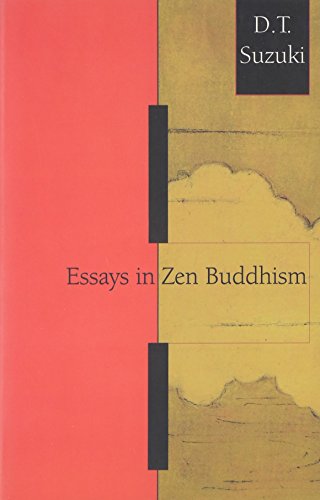
"Love makes the ego lose itself in the object it loves, and yet at the same time it wants to have the object as its own. This is a contradiction and a great tragedy of life."

– D.T. Suzuki, Essays in Zen Buddism


As the book progresses, I am wrestling with what it looks like for the "ego to have the object as its own."  I guess I'm really wrestling with was this author means by "ego."  This term is used in a lot of different kinds of writings and is often used differently depending on the author.  It's a hazy term.

For Freud, the ego is the sense of self that mediates between the internalized demands of culture (the superego) and our base drives (the id).

In common usage, the ego is the part of us that wants to be separate and superior when compared to others.  We all know what it means when someone says, "He has a big ego."

A lot of the spiritual writers use the term in a different way.  For these writers, the ego is the sense of self that wants to interpret everything only in how it relates to self.  For them, the ego is roughly synonymous with the natural self-centeredness we all inherit.  We are attracted to things that help us, and we avoid things that don't help us.  We are concerned, mostly, with ourselves.  In contemplative writings, the ego is sometimes contrasted with the "Higher Self," the Atman, the Indwelling of God.

In this last sense, for "the ego to have something as its own" would be simply to use things and people for self-interested purposes.  So we love our spouses, our friends, our kids, but we also use them subtly for our own ends.  We are concerned about how they appear, how they act, because they reflect upon us.  We want them to please us, etc. 

Related to the ego is the concept of self-will.  We seemingly use things to please us all the time.  I go to get ice cream.  Self-will.  I get coffee in the morning.  Self-will.  I buy a pair of pants I like.  Self-will.  

Where I am currently at is that ego, in the sense that the spiritual writers use it, is attachment to self-will.  Concern that I get what I want.  Preoccupation with self.  

We are going to experience self-will.  We have preferences.  We thirst when we need water.  We desire things.  I don't think we can ever get beyond that.  What we can get beyond is attachment to self-will.  Concern that we get what we want.  We can't, I don't think, eradicate self-will, but we can relativize it by losing ourselves in something larger than ourselves – God, service to the world.  I think when the Bhagavad Gita says:
 

"They are forever free who renounce all selfish desires and break away from the ego-cage of 'I,' 'me,' 'mine' to be united with the Lord. This is the supreme state." (2:71)


or
 

"Those who have attained perfect renunciation are free from any sense of duality; they are unaffected by likes and dislikes, Arjuna, and are free from the bondage of self-will." (5:3)


that the writer is encouraging us to lose preoccupation with ourselves.  To develop self-forgetfulness.  Not to get rid of self-will completely.  We still have likes and dislikes, but we are unaffected by if we get what we like or not.

At least that's what I think right now.  


Recaptured

 
"Belongings, assets, and wealth in the end had captured him, this was no longer play, these were no longer frills, rather they had become a burden, and he was chained to them."

– Herman Hesse, Siddhartha


Although it is not physical belongings and wealth that chain me (we each have our own unique attachments), this is where I am at.  I feel like I have tasted contemplative peace, the kind of peace where no external situation matters, where I am completely fulfilled in myself, in God.  Where I stop striving.  

And then suddenly it disappears.  

Then I'm lost and don't know how to get it back.  


Progressive Christian Writers, Bloggers, and Podcasters


My faith journey has taken me from conservative Christianity, to progressive Christianity, and ultimately to having a spiritual practice outside of traditional religious structures. Even though I didn’t find a home in the church, I still think there is a lot of value in interacting with voices from across the spectrum of faith. The following are some progressive Christian authors, bloggers, and podcasters who have been a part of my journey…


Marcus Borg

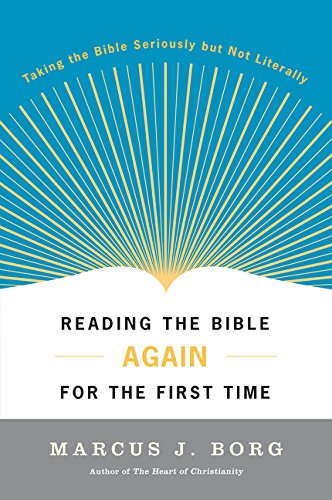
Marcus Borg was a historical Jesus and New Testament scholar who taught at Oregon State University.  He passed away in 2015.  Borg, maybe more than any other author on this list, articulated what progressive Christianity could look like in contrast to conservative versions of the faith.  Specifically he addressed how the Bible can be used in liberal Christian communities, advocating for its use as a sacrament – a means of experiencing God – not necessarily as a source for “correct theology.”   His book Reading the Bible Again for the First Time is very helpful for understanding the liberal/conservative divide.  He also wrote often about the historical Jesus, and presented a "wisdom Jesus," a Jesus who was primarily about dispensing general religious/ethical wisdom.  Resources from Marcus Borg can be found at the Marcus Borg Foundation.  For an audio recording of Borg speaking about religious pluralism, click here.


John Hick

John Hick was a religious scholar and a highly philosophical writer.  He was also a religious pluralist and advocated for a progressive Christianity in which traditional Christian language such as "Jesus is Lord" could be understood in a metaphorical sense.  His most well-known work is The Metaphor of God Incarnate, and here he clearly presents how Jesus can be understood from a progressive Christian perspective.  Personally, I find Hick’s The Fifth Dimension to be the best summary of his thought.  Reading Borg and Hick together provides a very clear paradigm for what a logical progressive Christianity could look like.  Each clearly addresses how both Scripture and Jesus can be understood from a liberal perspective.


Dale Allison

Dale Allison is a historical Jesus scholar who presents Jesus primarily as an Apocalyptic Prophet.  That is, Jesus expected the world as we know it to come to an end, followed by a final judgment and the inauguration of the eschatological Kingdom of God on earth.  In Allison's view, Jesus was wrong about the end of the world.  This picture of Jesus isn't advantageous to liberal (or conservative) Christianity and Allison knows it.  But his historical studies, for better or worse, have radically changed the way he thinks about the Christian faith.  Allison has written several volumes in the field of historical Jesus studies, and has also documented his own spiritual reflections in The Luminous Dusk and Night Comes.  His The Historical Christ and the Theological Jesus has had more impact on my own theology than any book I have ever read.  Read at your own risk.  Allison teaches at Princeton Theological Seminary.  


Walter Brueggemann


Walter Bruggemann is an Old Testament scholar who has written widely on themes from the Hebrew Scriptures.  His most well known work is The Prophetic Imagination, in which he analyzes the prophetic Hebrew tradition from Moses to Jesus.  I also really resonated with his Spirituality of the Psalms.  His paradigm of Orientation, Disorientation, and New Orientation as seen in the writings of the Psalmist was helpful for me as I was going through my own deconstruction and reconstruction of faith.  Brueggemann is part of the United Church of Christ and regularly speaks within that tradition and others.  His content is centralized at www.walterbrueggemann.com.


Richard Rohr


Richard Rohr is a Franciscan Friar from the Roman Catholic Tradition.  He runs the Center for Action and Contemplation in New Mexico.  Rohr is a widely publicized author who focuses on the contemplative dimension of the gospel.  Although he does not overtly deny traditional Catholic and Christian doctrine, he stretches his tradition to its limits and seems unconcerned with maintaining orthodoxy.  Rohr draws heavily from the Christian mystics and the world Perennial Tradition.  His What the Mystics Know is a good introduction to some major themes in Christian Mysticism. Rohr's work includes The Divine Dance, Falling Upwards, Everything Belongs, The Naked Now, and Immortal Diamond.  For more on Rohr, check on the Center for Action and Contemplation


Peter Enns


Peter Enns is a biblical scholar who created waves in the Evangelical world with his Inspiration and Incarnation in 2005.  Due to this book, he was suspended from his teaching position at Westminster and eventually resigned.  In most of his work, Enns emphasizes the ancient context of the biblical writings.  He is unafraid to address where there are tensions and contradictions in various biblical texts and this puts him at odds with many conservative Christians.  Over the years, Enns has continued to push Evangelical limits further as seen in his more recent books The Sin of Certainty and The Bible Tells Me So.  Enns blogs and podcasts at peteenns.com.  Another scholar who addresses very similar issues is Kenton Sparks, specifically in his God's Word in Human Words.  


Richard Beck

Richard Beck teaches psychology at Abilene Christian University.  He also runs a popular blog called Experimental Theology, writing about topics ranging from The Devil, to disgust psychology, to the fear of death, to the authenticity of faith in God.  As the range of his book and blog topics suggests, Beck is kind of all over the place.  His seeming lack need to fit his theology into any particular box can be both freeing and frustrating for his readers.  Beck is orthodox enough to appeal to conservative Christians, but liberal enough to cause some significant hand-wringing.  Beck has recently started to refer to himself as “post-progressive” as his thought has developed.


Rachel Held Evans

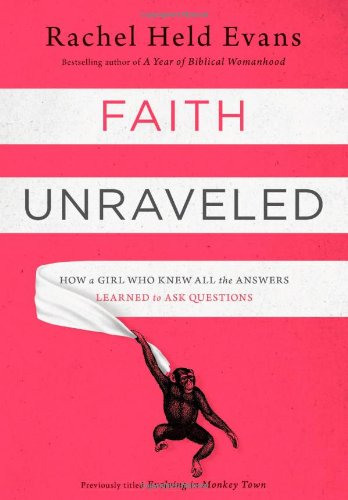
Rachel Held Evans emerged within Christian circles in 2010 with her Evolving in Monkeytown (now repackaged as Faith Unraveled) in which she documented her own journey of faith.  Evans grew up within Evangelicalism but found herself questioning many of its core tenants through her ongoing life experience. Evans also more recently wrote Searching for Sunday and A Year of Biblical Womanhood before passing away unexpectedly in 2019. I don’t know that Rachel ever used the term “progressive” to describe herself, but she certainly represents a non-traditionally conservative/Evangelical voice from within the Christian tradition. Evans’ personal site is still active at rachelheldevans.com.


Rob Bell

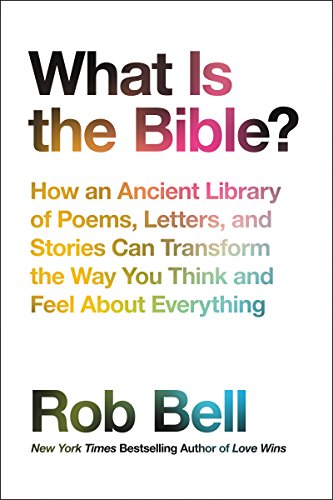
Rob Bell was a mega-church pastor of Mars Hill Bible Church in Michigan.  He's not anymore.  When Bell was in the Evangelical world he was highly controversial, pushing more and more Evangelical boundaries through his books and preaching until the bubble burst with his Love Wins.  Many Evangelicals distanced themselves from Bell after this book in which he seems to accept, or at least be highly open to, some type of universal salvation.  Bell now blogs, speaks, and podcasts at robbell.com.  His books include Love Wins, How to be Here, What We Talk About When We Talk About God, Velvet Elvis, and his upcoming What is the Bible?  Bell is another thinker who doesn't seem too interested in labels.  If he still considers himself Christian, he is definitely on the progressive end of the faith.  


The Deconstructionists


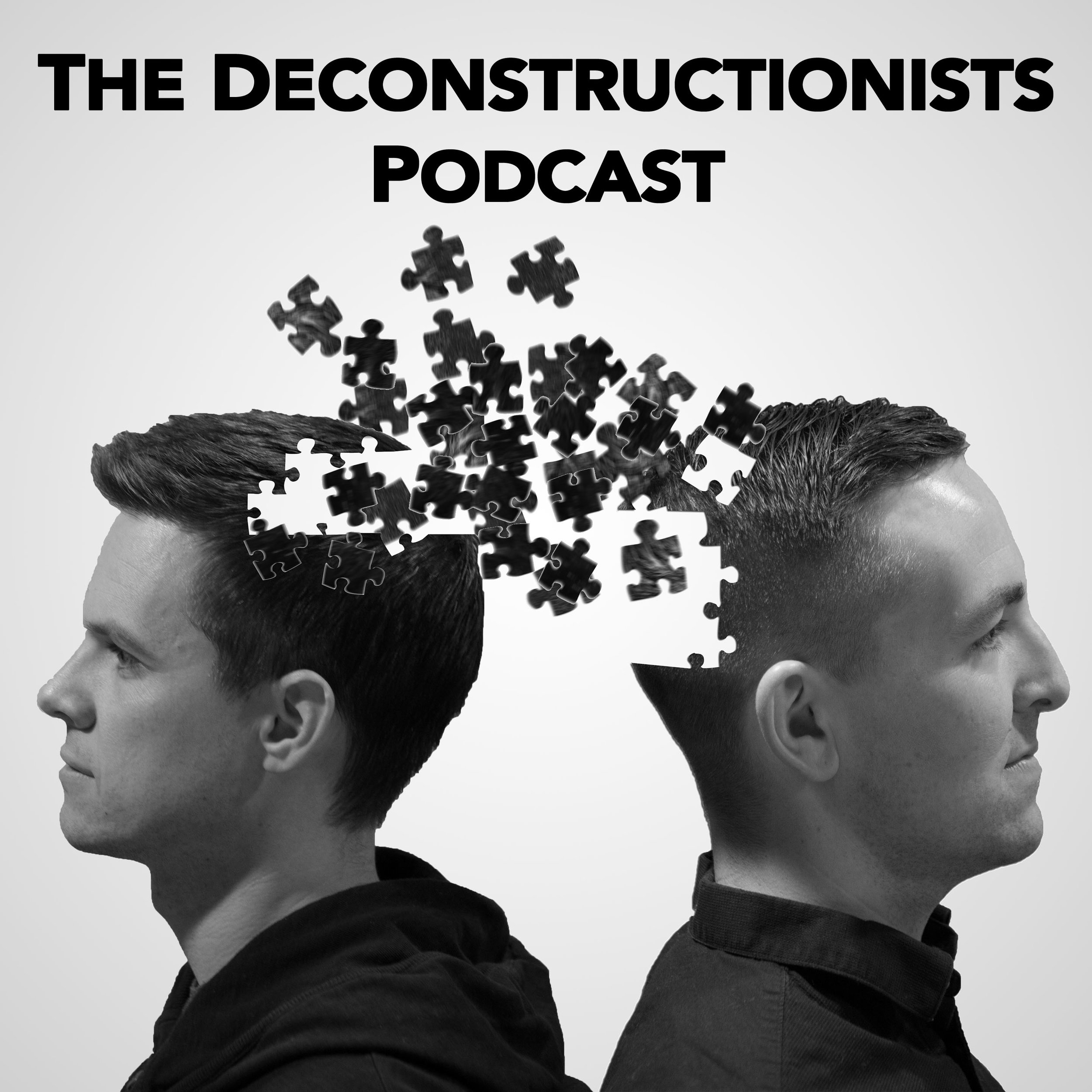
The Deconstructionists was a new podcast in 2016. Adam Narloch and John Williamson host discussions with scholars and thinkers from across the faith spectrum including several of the authors listed above.  Narloch and Williamson come from the Evangelical world, but emphasize an openness to new ideas, especially as previous understandings of the faith fall apart or become "deconstructed."  Their content can be found at www.thedeconstructionists.com.  


Some other popular authors on the progressive side of things include Karen Armstrong, John Shelby Spong, John Dominic Crossan, Brain McLaren, Phyllis TickleDiana Butler Bass, and Mike McHargue.

These writers, bloggers, and podcasters represent a diversity of thought.  Some are self-consciously outside of "orthodox Christianity" while others are not.  Some may even reject the label Progressive Christian or simply be done with labels altogether.  But each is worth interacting with if you’re interested in exploring a wide range of views on modern Christian faith.


Grandma


My Grandma passed away last week.

Grandma was a saint.  Whether it was the way she hosted the holidays – cooking a fantastic meal, making sure everyone felt included, keeping up to date on all of our lives – or the way she took care of her own disabled child into adulthood and her own husband as his health declined, or how she served her faith community for over 30 years, I truly don't know anyone as self-less as Grandma was.  She had lost concern for herself, and lived fully to serve God and others.  She had become a saint. 

In many ways I owe Grandma for my own spiritual journey.  Her strong faith, and the way she raised her children in the church, affected how my own parents raised me.  Although I have moved on from the religious structures I inherited, it was there where I began my journey.

As I continue this blog, most who resonate with my thoughts will be those who see themselves as "spiritual but not religious," those who may have moved beyond, or maybe have never been a part of, traditional western religious structures.  Contemplative spiritual practice tends to lend itself to a positive outlook on other faiths, a kind of openness to "universal spirituality," which is sometimes threatening to those who are part of traditional structures. 

But these structures can, and do, still work for many people.  My Grandma held very traditional beliefs about Jesus, the Bible, Salvation, etc.  She was nourished by the Christian scriptures, by sermons based on those scriptures, and by the body of Christ.  Traditional Christian beliefs and practices were part of what formed her character – what caused her to become self-less and completely other oriented.  

The experience of God can be accompanied by a host of different beliefs.  Some of those beliefs I agree with and some of them I do not.  Some of them I even find harmful if taken to their logical conclusions.  But just because a certain system doesn't "work" for me, doesn't mean it doesn't work for others.  It certainly did for Grandma.

Grandma's funeral ended with her favorite song, How Great Thou Art.  Rest in peace Grandma.  Thank you for the light you brought to our family.  We love you so much.  


Kicking Things Off


Hi all! Welcome to the site. The blog portion of this site exists mostly for me to organize my own thoughts regarding topics related to contemplative spirituality. Hopefully you can find something here that is of value to you on your own journey.

Feel free to explore and reach out if you have any thoughts on posts/pages on the site. I can be contacted at anthony@thecontemplativelife.org.

Welcome,

Anthony